Last updated: October 1, 2026
Scars from breast augmentation are an expected result of the incisions used to place implants. Many become less noticeable as they heal, but they do not disappear completely. If you are considering breast augmentation, incision placement and a surgeon-guided recovery plan can help you set realistic expectations.
Will scars from breast augmentation be noticeable?
Breast augmentation scars can be noticeable, especially early in healing, but their appearance often softens over time. Visibility depends on incision placement, skin characteristics, healing, and how the scar sits against the breast or nearby skin. No surgical approach can promise an invisible scar, so planning begins with an honest discussion of where an incision may be seen.
For many patients, the concern is not simply whether a scar exists, but whether it will stand out in everyday clothing or swimwear. The American Society of Plastic Surgeons’ guidance describes scars as a normal part of healing and emphasizes appropriate postoperative care. That guidance supports a practical goal – helping scars heal as well as possible – rather than guaranteeing a particular appearance.
Are breast augmentation scars permanent?
Yes. A surgical incision leaves a permanent scar, even when the mark becomes faint. Early redness or firmness may change as the scar matures, and the final appearance varies from person to person. Ask your surgeon what changes are expected during recovery and which changes warrant a call to the office.
Where are breast augmentation incisions usually placed?
Breast augmentation incisions are commonly placed in the fold beneath the breast, along the edge of the areola, or in the armpit. Each location places the resulting scar in a different setting, so visibility can change with breast shape, clothing, and arm position. The best location is an individual surgical decision, not a universally hidden option.
An incision around the areola may blend with the change in skin color at its edge, while an armpit incision moves the scar away from the breast itself. Neither placement guarantees that the mark will be hard to see. Anatomy, skin characteristics, implant choice, and surgical technique all affect which approaches may be appropriate; not every approach is right for every patient.
How does an under-breast incision affect scar visibility?
An under-breast, or inframammary-fold, incision places the scar where the breast meets the chest. The fold may help conceal it when the breast is at rest, although the mark can be visible when the breast is lifted or viewed from below. Breast shape can also change how closely a scar follows the natural crease.
A consultation lets you explain which views matter most to you. For more questions to bring to that discussion, see our breast augmentation surgeon questions.
How does the breast augmentation procedure affect scarring?
The breast augmentation procedure places an implant through a planned incision, which later heals as a scar. Incision size and location can differ with the surgical approach, implant, and patient’s anatomy. Choosing an implant therefore involves more than the desired breast size: your surgeon also considers how the implant can be placed and where healing will occur.
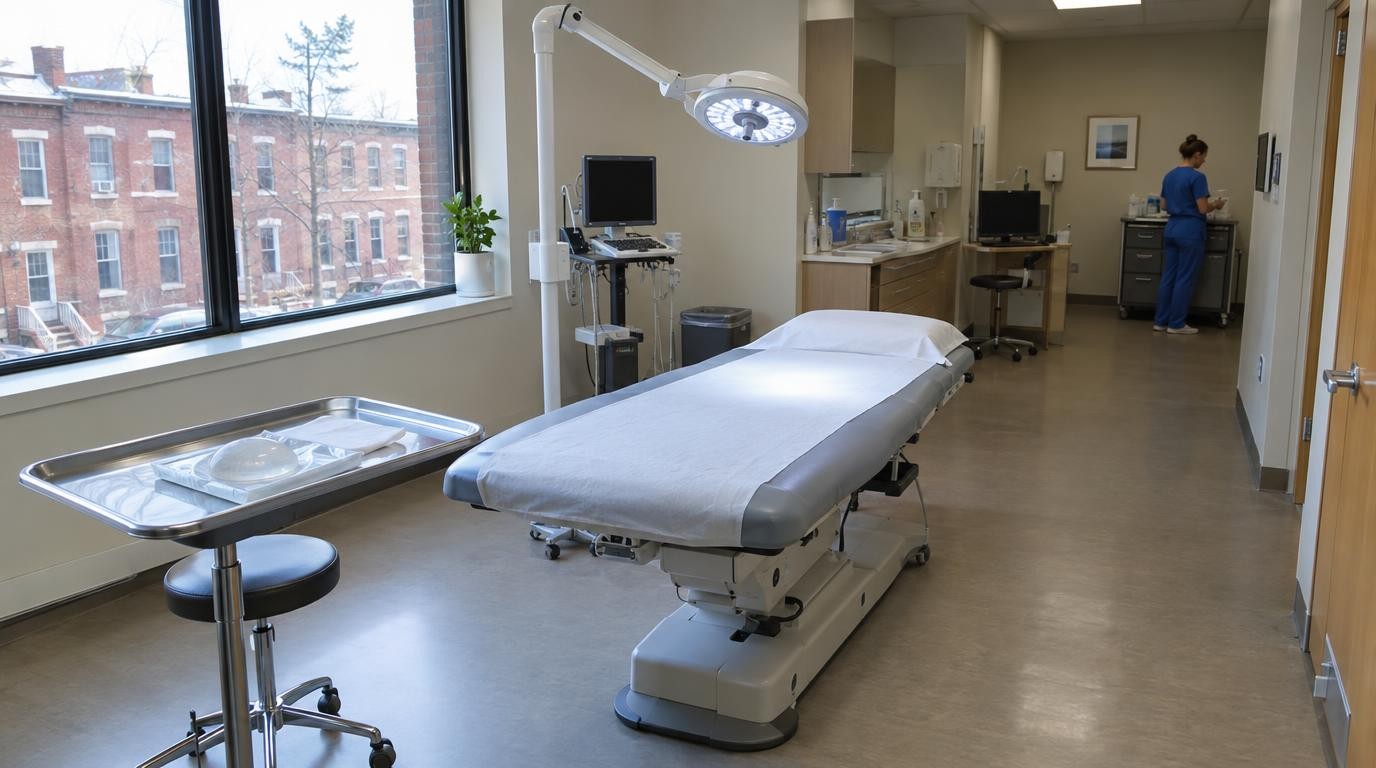
During surgical planning, your surgeon can explain the proposed incision and why it suits the operation. Silicone and saline breast implants have different placement considerations, but an implant label alone cannot predict your scar length or appearance. Ask how the recommended approach relates to your tissue, your goals, and any previous breast surgery.
Why does the incision used for implant placement matter?
The incision determines where a breast augmentation scar begins to heal and gives the surgeon access for implant placement. A well-chosen location balances surgical access with the patient’s preferences about scar visibility. The discussion may change if you are also considering a breast lift, which addresses sagging and involves its own incision plan. Our guide to breast implants without a lift explains when implants alone may be enough to meet your goals.
Our guide to what a breast lift involves can help you distinguish that procedure from augmentation. Neither procedure should be selected on scar placement alone; the overall plan needs to fit the result you want and the care you can follow during recovery.
Who may need a more personalized scar-care plan?
Patients with a history of raised or unusually noticeable scars may need a more personalized breast augmentation scar-care plan. Skin tone, previous breast surgery, family scar history, and individual healing factors also deserve discussion. These details cannot predict an exact outcome, but they help a surgeon plan incision placement and give aftercare advice suited to the patient.
In clinical practice, an existing scar can offer useful context: your surgeon can examine how it healed rather than relying only on a general description of your skin. Tell the surgeon about scars that became thick, raised, or persistently discolored, as well as any difficulty healing after past procedures. Share your incision preferences, even if you are unsure which placement is possible.
Can skin tone or a history of raised scars affect planning?
Yes. Some patients are more prone to noticeable pigment changes or raised scars, and a personal history can make that concern especially relevant. Skin tone alone does not determine how a breast augmentation incision will heal. An individualized conversation is more useful than assuming that any particular skin type will have a certain result.
At Skinsational Cosmetic Surgery Clinic, your surgeon can review your history and discuss how your preferences fit a proposed incision plan.
Risks, Side Effects and Who Is Not a Candidate
Breast augmentation is surgery, and scar care does not remove its surgical or implant-related risks. Expected early effects can include soreness, swelling, bruising, and a visible healing incision. Possible problems include infection, bleeding, poor wound healing, changes in breast or nipple sensation, and an unfavorable scar. Discuss your personal risks with your own clinician before deciding on surgery.
Implants can also develop firmness from scar tissue around the implant, shift position, or rupture, and future surgery may be needed. Rare cancers have been associated with breast implants or the tissue surrounding them. Your surgeon should explain implant-specific risks and what follow-up may be appropriate, without suggesting that careful scar care prevents problems inside the breast.
People with an active infection or untreated breast cancer or precancerous breast conditions should not proceed with breast implant surgery. Pregnancy or nursing also means postponing implant surgery. Other health conditions, medicines, or healing concerns may make surgery unsuitable or call for a different plan; a clinician must assess those circumstances individually.

For the incision itself, follow your surgeon’s instructions on cleansing, dressings, activity, and follow-up visits. Ask before applying silicone scar sheets, creams, or other products, because a healing incision may need different care from fully closed skin. Protecting the area from sun exposure and allowing time for healing are sensible parts of a surgeon-directed plan.
The incision-care steps described here are:
- Follow your surgeon’s instructions on cleansing, dressings, activity, and follow-up visits.
- Ask before applying silicone scar sheets, creams, or other products.
- Protect the area from sun exposure and allow time for healing.
What should you discuss at a breast augmentation consultation?
A breast augmentation consultation should connect your desired result with a realistic incision and recovery plan. Bring questions about likely scar locations, your personal healing history, implant-related risks, and when to begin any scar-care product. Your surgeon can explain what to expect during breast augmentation recovery and which changes should prompt a call.
If you are traveling from Boston, Massachusetts, ask how to plan follow-up care after returning home. To discuss breast augmentation and scar expectations, contact Skinsational Cosmetic Surgery Clinic in Providence, Rhode Island, to arrange a consultation.
Frequently Asked Questions
How long does it take for breast augmentation scars to fade?
Breast augmentation scars often become less noticeable as they heal, but there is no single fading timeline that applies to everyone. Early redness or firmness may change as the scar matures. Ask your surgeon what changes to expect during your recovery and when to check in about the incision.
What will breast augmentation scars look like in a swimsuit?
Scar visibility in a swimsuit depends on the incision location, breast shape, and the swimsuit’s coverage. A scar beneath the breast may be concealed by the natural fold when the breast is at rest, but visible from below. Discuss the views and clothing that matter most to you when planning your incision.
When can I start using silicone scar sheets after breast augmentation?
Start silicone scar sheets only when your surgeon says they are appropriate for your incision. A newly healing incision can need different care than skin that has fully closed. Follow your surgeon’s directions for cleansing and dressings first, and ask at a follow-up visit when to begin any scar product.
Does choosing silicone or saline implants determine the size of my scar?
No, choosing silicone or saline implants alone does not determine scar length or appearance. The incision plan also depends on the surgical approach and your anatomy. Ask your surgeon how the proposed implant will be placed, where the incision will be, and why that combination fits your goals.
What should I tell my surgeon about scars from previous procedures?
Tell your surgeon if past scars became thick, raised, or persistently discolored, or if you had difficulty healing. An existing scar may help your surgeon assess how your skin has healed before. Share your preferences about incision placement as well, so your surgeon can tailor the plan and aftercare discussion.
How should I plan follow-up care if I travel for breast augmentation?
Arrange follow-up care with your surgeon before traveling home after breast augmentation. Ask when visits are needed, how to care for your incision between appointments, and which changes should prompt a call to the office. If you are returning to Boston from Providence, discuss that travel during your consultation.
This article is general information and is not medical advice. Talk to a licensed clinician about your own situation before making a treatment decision.