Last updated: November 17, 2026
In an O-Shot vs G-Shot comparison, the central difference is what is injected: an O-Shot uses platelet-rich plasma (PRP) prepared from your blood, while a G-Shot uses filler to augment a region of the anterior vaginal wall. At Skinsational Cosmetic Surgery Clinic, we offer PRP Injections for Women (O-Shot®) in Providence, Rhode Island.
O-Shot vs G-Shot: What Is the Difference?
Both are nonsurgical injections, but PRP is proposed to affect tissue responses, whereas filler adds local fullness. Their intended effects and repeat-treatment expectations differ.
The American Society of Plastic Surgeons’ guide to O-Shots and G-Shots distinguishes blood-derived PRP from filler augmentation. Neither name identifies a guaranteed outcome: a useful comparison starts with the material, the proposed injection sites and the concern you hope to address.
What Is an O-Shot Injection, and How Is PRP Prepared?
- Blood draw: We take a small sample from your arm to prepare your own PRP.
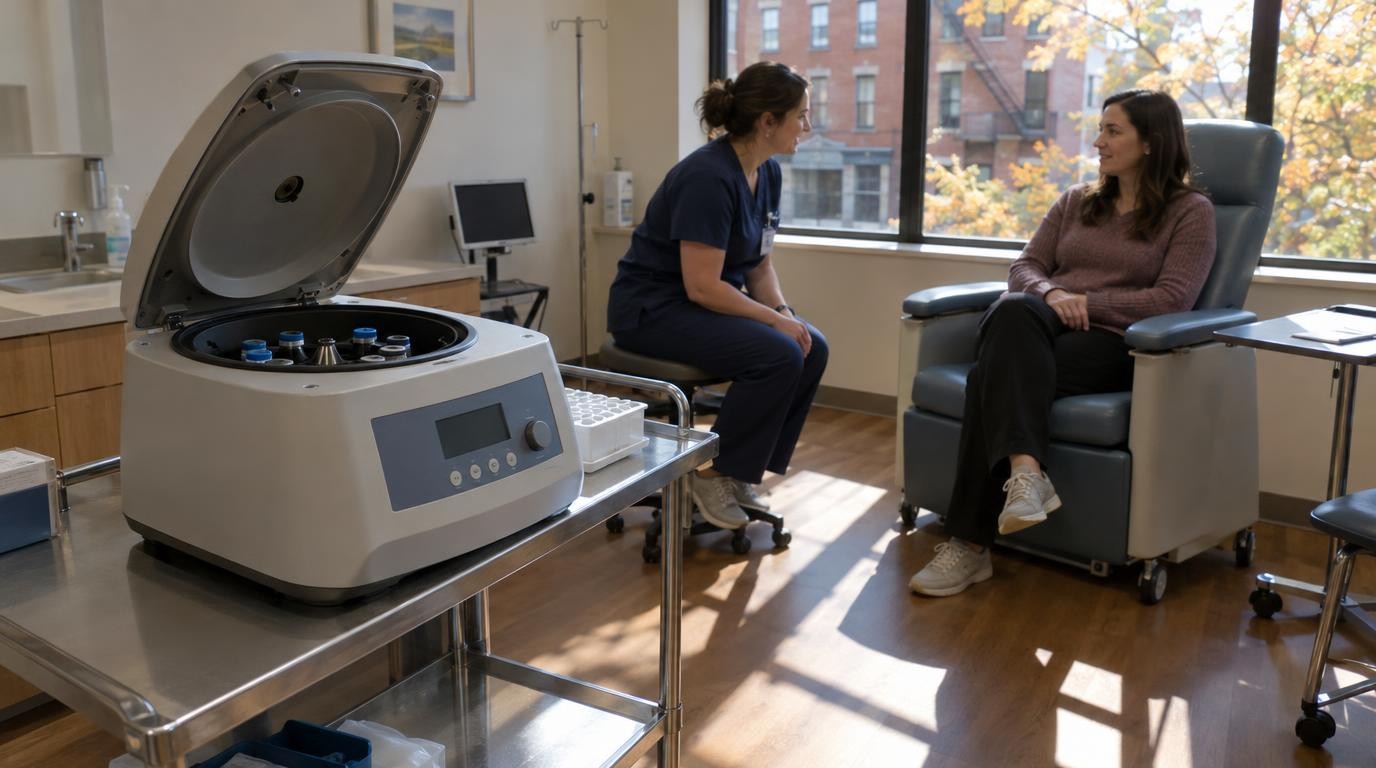
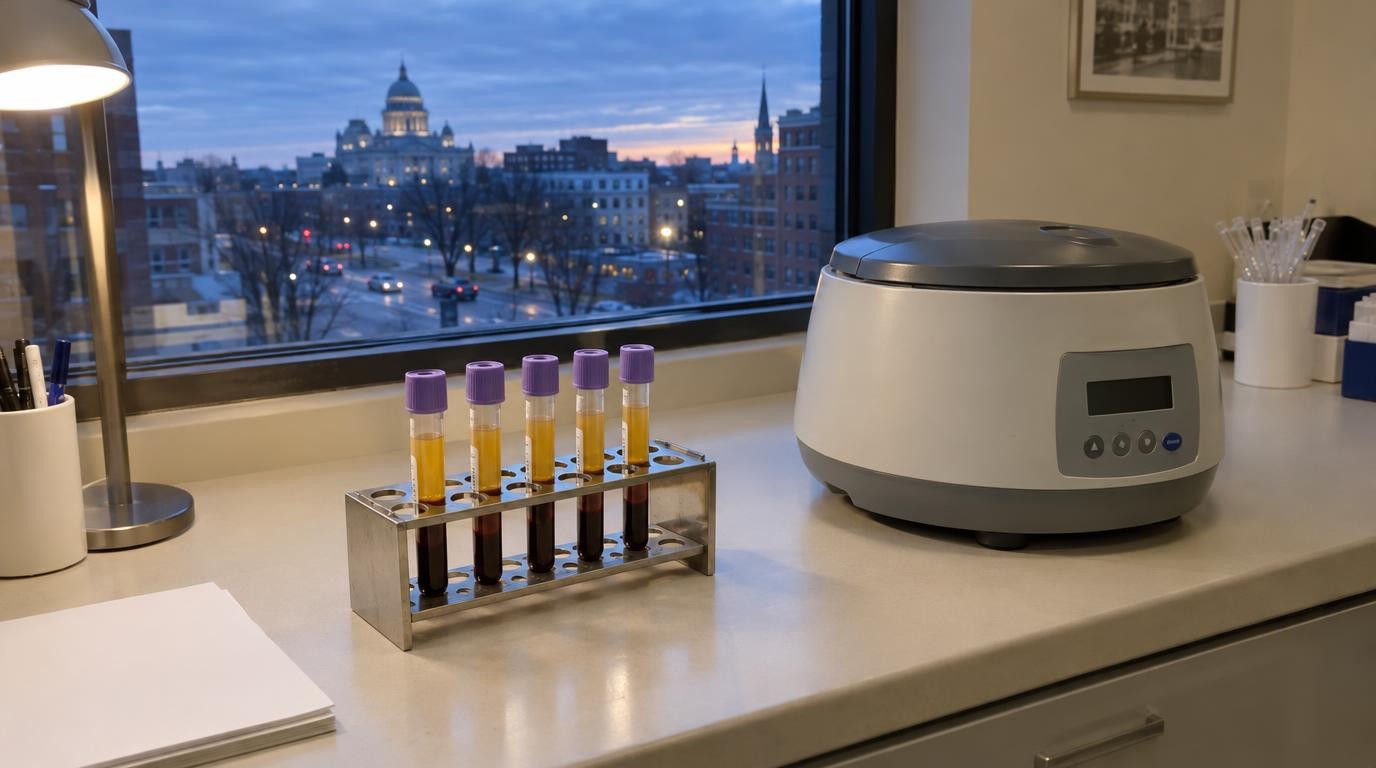
- Centrifugation: A centrifuge separates and concentrates the platelet-rich portion of the sample.
- Targeted injection: After topical numbing, we place PRP in selected external genital tissues and the anterior vaginal wall.
Growth factors provide a rationale for investigating intimate PRP injections, not proof that an injection will improve sexual function or urinary leakage. The American Academy of Dermatology’s explanation of PRP preparation and evidence describes PRP equipment as medical devices and notes unanswered questions even in skin treatment. Intimate PRP injections for sexual or urinary concerns are an off-label use; FDA regulation of PRP-preparation equipment does not mean the injections are FDA-approved for those purposes.
What Does the G-Shot Do, and What Does It Inject?
A G-Shot injects filler into the anterior vaginal wall region associated with the G-spot to add local fullness, with a hoped-for but unproven improvement in sexual sensation. Using filler there for sexual enhancement is an off-label use.
The precise material matters: fillers can differ in how they behave and how long an effect may last. A G-Shot is not simply another name for the PRP service we provide at Skinsational.
Where Is the G-Spot, and Where Are These Injections Placed?
“G-spot” refers to a proposed sensitive region of the anterior vaginal wall near the urethra, not a discrete structure that can be located identically in every patient.
The American Society of Plastic Surgeons’ overview of genital anatomy and procedures notes that investigators do not all agree on whether the G-spot exists as a distinct structure. Anatomy, injection placement and personal response vary; neither procedure guarantees an orgasm.
Who Might Consider PRP Injections Instead of G-Shot Filler?
PRP may be worth discussing when the concern involves arousal, dryness-related discomfort or mild to moderate stress urinary leakage; localized filler augmentation is discussed chiefly in relation to sexual pleasure. These goals are different, and neither injection is a universal treatment. Identifying the cause of a symptom matters more than choosing a procedure by its name.
At Skinsational, our PRP Rejuvenation for Women consultation considers the concern you bring in rather than assuming every symptom has the same cause. Low libido, painful intercourse and leakage can have different explanations. Lubricants or vaginal moisturizers may help dryness-related discomfort, while pelvic floor muscle training is an established option for stress leakage. Our guide to what the evidence shows for nonsurgical vaginal rejuvenation explores why treatment claims need careful interpretation.
What Happens During Intimate PRP Treatment and Recovery?
After the procedure described above, you can usually resume ordinary activities without physical downtime. At Skinsational, we recommend avoiding intercourse for 24 hours after an injection.
At your confidential consultation, Dr. Luciano Sztulman, MD, FACOG, FACS, reviews your health history, discusses the proposed injection sites and expected sensations, and helps plan the number of sessions—typically 1-3 at Skinsational—according to your goals. The American Society of Plastic Surgeons also describes ice and, sometimes, local anesthetic for intimate injections; we will explain the numbing planned for you.
When Might Results Appear, and How Often Are Treatments Repeated?
At Skinsational, we estimate that initial PRP changes may appear within a few days to a week and fuller benefits may become noticeable in 3 to 8 weeks; the American Society of Plastic Surgeons describes G-Shot filler injections as repeated every three to five months.
Treatment schedules and the timing of any benefit are different questions:
| Treatment | Reported timing and repeat treatment | What the estimates mean |
|---|---|---|
| Intimate PRP | At Skinsational, we estimate that benefits may last 12 to 18 months, and most patients opt for an annual booster. The American Society of Plastic Surgeons also describes O-Shots as repeated annually, while an ASPS article on genital injectables quotes a surgeon who describes O-Shot effects lasting six months to a year. | These differing duration estimates do not promise that symptoms will improve or establish how long any improvement will last for you. |
| G-Shot filler | Filler adds local fullness when injected, but no reliable onset of improved sexual sensation has been established. | The repeat interval above does not establish how long a change in sensation might last; the filler used and your response affect follow-up needs. |
Evidence for consistent sexual-function benefits and precise durability remains limited. Our discussion of O-Shot results and maintenance explains why an individual outcome may differ from an estimate. Photographs, including those in our before-and-after photo gallery, cannot establish a change in sexual function or urinary symptoms.
What Are the Risks, Side Effects, and Reasons to Delay Either Injection?
Either injection can cause temporary discomfort, swelling, bruising or bleeding at the injection site, and any injection carries an infection risk. Filler can also cause a material-specific reaction or unevenness; injection into a blood vessel can cause serious tissue injury. Using your own PRP does not remove the risks of needles or improper handling.
The American Society of Plastic Surgeons says patients typically do not experience pain afterward, although temporary local effects can still occur. Those effects differ from potentially serious complications such as infection or tissue injury. Dependable complication rates for these intimate injections have not been established, so we cannot give a meaningful percentage for these risks.
Active genital or urinary infection is a reason to defer an elective injection until assessed. Unexplained pain or bleeding, a bleeding disorder, relevant medications or pregnancy also call for assessment before treatment; these examples are not an exhaustive contraindication list. Discuss your history and the proposed material with your own clinician.
For PRP skin rejuvenation, the American Academy of Dermatology advises against treatment for people with hepatitis C, HIV/AIDS, any type of blood cancer, cardiovascular disease requiring a blood thinner, or skin cancer in the treatment area; these conditions may affect the expected PRP response. That guidance concerns skin treatment, not an automatic eligibility rule for intimate PRP. Tell Dr. Luciano Sztulman if any of these conditions applies to you so he can assess your situation individually.
Seek prompt medical care after an injection for fever, worsening or severe pain, spreading redness, heavy bleeding or difficulty urinating. Trouble breathing or a rapidly developing severe reaction requires emergency care. Sterile preparation matters with blood-derived treatments: the Centers for Disease Control and Prevention’s investigation of presumptive HIV transmission associated with PRP microneedling facials at a spa underscores the importance of infection-control practices without suggesting that such outcomes are typical.
Frequently Asked Questions
How do you find the O-spot?
There is no standard anatomical “O-spot” to find. The O in O-Shot stands for “orgasm,” not a named body part. The American Society of Plastic Surgeons describes PRP injections near the clitoris and anterior vaginal wall. Sensitivity varies between people, and an injection cannot guarantee an orgasm.
Can an O-Shot or G-Shot help if I have never had an orgasm?
Neither injection is likely to solve lifelong difficulty reaching orgasm. The American Society of Plastic Surgeons says preliminary evidence suggests these injections may help some women, but they are unlikely to help someone who has never achieved orgasm. Pain, medication effects and other possible contributors deserve attention rather than relying on an elective injection.
Can I consider an O-Shot after menopause?
Yes, you can consider intimate PRP after menopause, but menopause alone does not establish that it will help. At Skinsational Cosmetic Surgery Clinic, we review your symptoms and health history before considering treatment. For menopause-related vaginal dryness, lubricants, moisturizers and, when appropriate, prescription vaginal estrogen are established options.
Will an O-Shot help urge incontinence as well as stress leakage?
An O-Shot should not be assumed to help urge incontinence. Stress leakage happens with pressure such as coughing or exercise; urge incontinence involves a sudden need to urinate. At Skinsational Cosmetic Surgery Clinic, we discuss intimate PRP for mild to moderate stress leakage, not as a proven treatment for either type.
Is an O-Shot one injection or a series of injections?
An O-Shot visit may involve injections at more than one site; it does not necessarily mean one needle placement. At Skinsational Cosmetic Surgery Clinic, we place PRP in selected external genital tissues and the anterior vaginal wall. We typically plan 1-3 sessions based on your goals, without promising a particular result.
What if I take blood thinners – can I still have intimate PRP?
Do not stop a prescribed blood thinner on your own. Blood thinners can increase injection-related bleeding or bruising. The American Academy of Dermatology advises against PRP for skin rejuvenation in people with cardiovascular disease requiring a blood thinner; that advice concerns skin treatment and does not, by itself, determine eligibility for intimate PRP.
Are O-Shot and G-Shot brand names, or general names for injections?
Both are trademarked treatment names, not interchangeable labels for any intimate injection. The American Society of Plastic Surgeons notes that clinicians may use different terms for similar procedures: an O-Shot uses blood-derived PRP near the clitoris and anterior vaginal wall, whereas a G-Shot uses filler in the anterior vaginal wall region. At Skinsational Cosmetic Surgery Clinic, our O-Shot service uses PRP.
How Can You Choose the Next Step in Providence?
Choose the next step by identifying your main concern and its possible cause, then confirming the proposed material, injection sites, uncertainties, risks and follow-up plan. Skinsational Cosmetic Surgery Clinic offers a private intimate PRP consultation with Dr. Luciano Sztulman in Providence, Rhode Island.
- Define the concern: Is the priority arousal, dryness-related pain, leakage or localized fullness?
- Plan follow-up: Track whether the symptom you hope to change improves and how long any change lasts before considering another injection.

If you would like to discuss whether intimate PRP fits your goals, contact Skinsational Cosmetic Surgery Clinic at (401) 386-7252 to arrange a confidential consultation with Dr. Luciano Sztulman in Providence, Rhode Island.
This information is general and is not medical advice. Talk to a licensed clinician about your own situation before making a treatment decision.
About the doctor at Skinsational Cosmetic Surgery Clinic
Dr. Luciano Sztulman, MD, FACOG, FACS – Cosmetic surgeon with over thirty years of experience.