Last updated: October 9, 2026
A thread lift before and after comparison may show a subtle improvement in sagging cheeks, loose jowls, the jawline, brows, or mild neck laxity, but it will not reproduce a surgical facelift. At Skinsational Cosmetic Surgery Clinic, our PDO thread lift treatment can produce an immediate lift, but swelling may affect how an early result looks in photos.
What Changes Can You See Before and After a Thread Lift?
A thread lift may make mildly sagging tissue look more lifted and the jawline more defined, particularly around the cheeks and jowls. Changes are generally subtler than those from a surgical facelift. Because swelling can accompany the immediate lift, a convincing before-and-after comparison needs consistent photos and a clearly identified treatment date.
What should you compare in thread lift before-and-after photos?
Compare the same facial angles, lighting, expression, head position, and treated areas. Ask when each photo was taken and whether the patient had other treatments. A front-facing photo alone may not show a change in jawline definition that is easier to see from the side; different lighting can make folds or skin texture look better or worse without a treatment effect.
The American Society of Plastic Surgeons’ thread lift results page says most patients are presentable in 3-5 days, although final healing may take a few weeks. Swelling or bruising can change the appearance of early photos. Patient photos should be used only with consent and with the treatment and photo timing identified. A photo of someone else’s result is an example to discuss, not a forecast for your own face.
Can you see a before and after photo of a PDO thread procedure for a turkey neck?
We cannot show a verified PDO-thread “turkey neck” before-and-after photo here. The American Society of Plastic Surgeons’ PDO thread-lift before-and-after case documents midface and lower-face treatment, not a verified neck result. During your consultation, ask our team whether a consented neck-treatment example is available and, if so, when the photos were taken and whether other treatments were involved. Threads may help mild neck sagging, but substantial loose neck skin often needs a different approach. An article on the American Society of Plastic Surgeons’ website about neck treatments notes that nonsurgical treatments may leave visible neck laxity, while a surgical neck lift can produce more dramatic, longer-lasting changes.
How Does a PDO Thread Lift Create Those Changes?
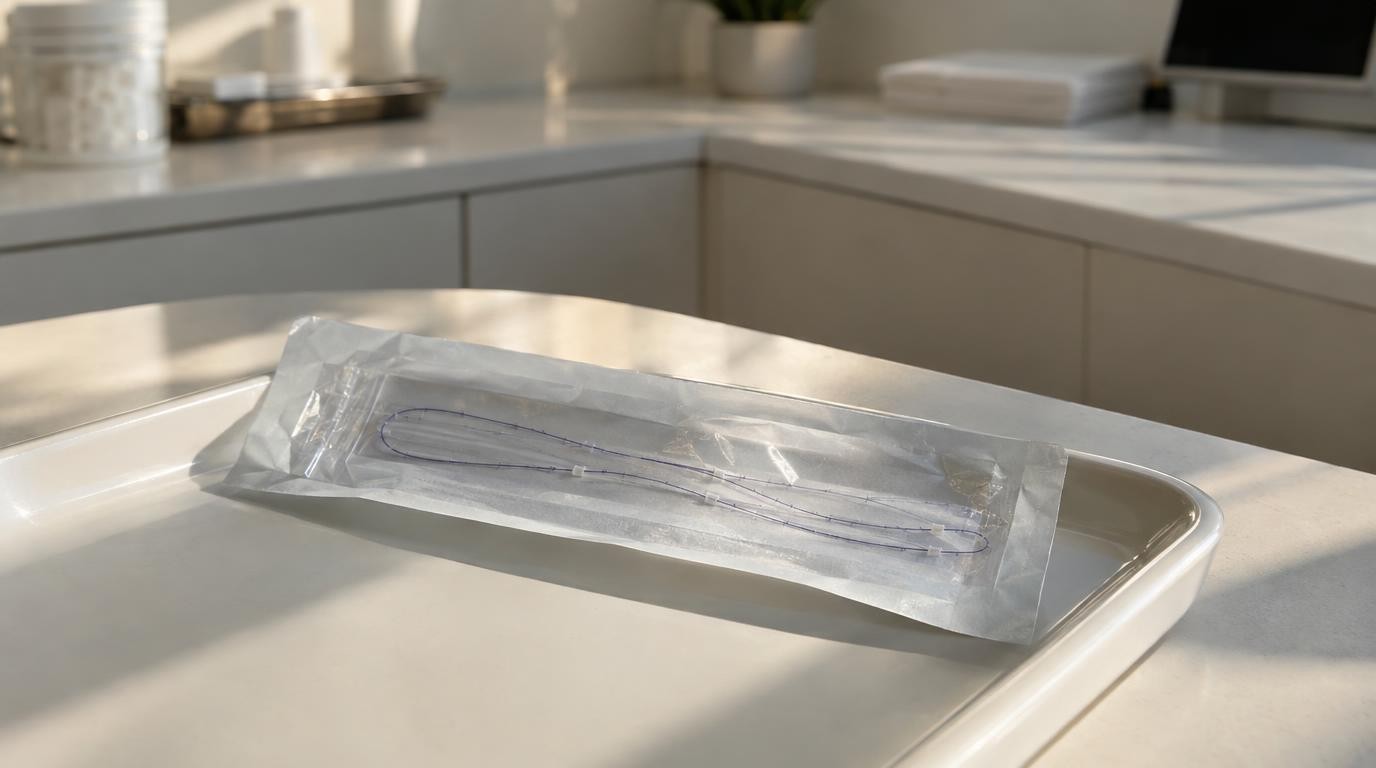
A PDO thread lift places absorbable threads beneath the skin to reposition mildly lax tissue. Barbs or cogs on lifting threads anchor tissue for an immediate change, while the body’s healing response produces collagen as the threads dissolve. At Skinsational, Dr. Luciano Sztulman maps thread placement to the areas and contours being treated.
What is a collagen thread lift?
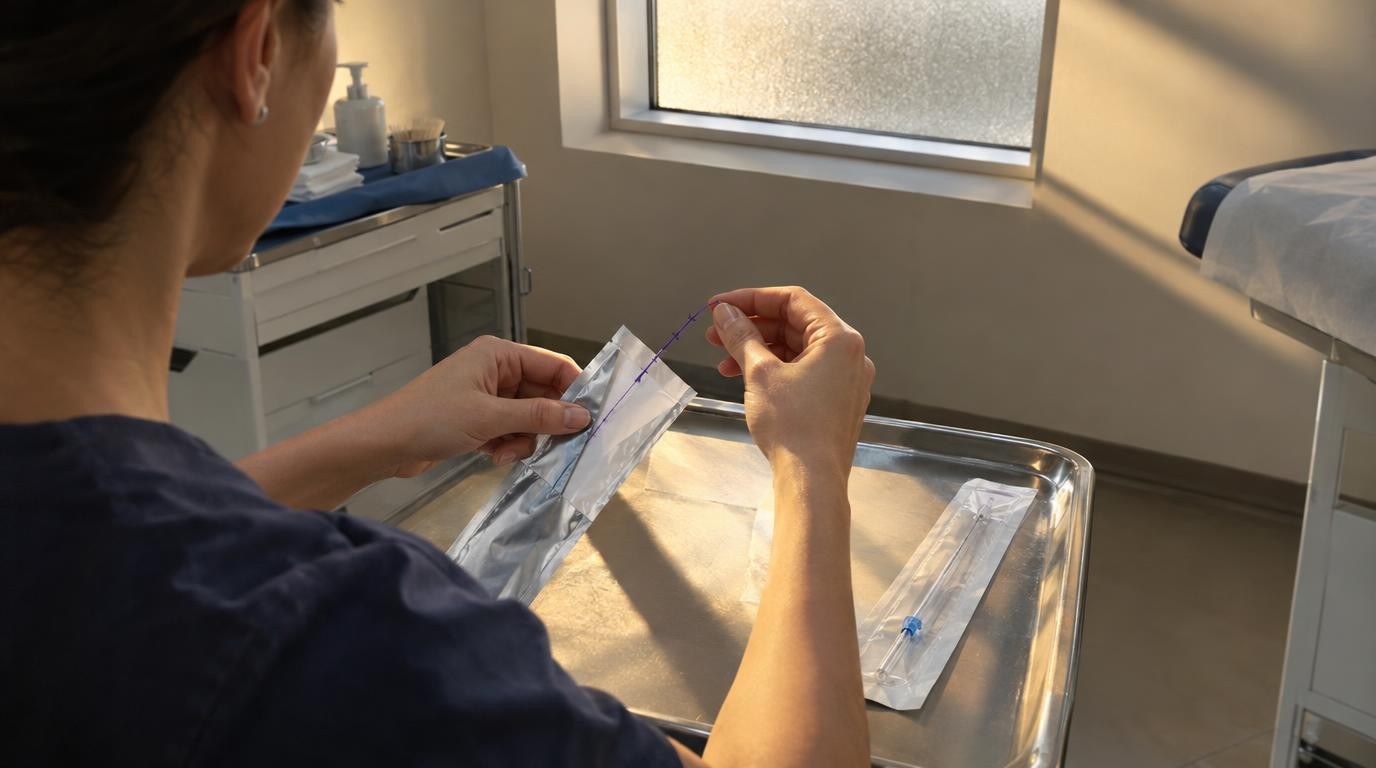
“Collagen thread lift” means a lift that stimulates your own collagen; PDO lifting threads are made of absorbable suture material, not collagen. As the threads break down, collagen forms around the treated tissue and may contribute to later firmness. The American Society of Plastic Surgeons’ thread lift overview distinguishes that collagen response from the physical lifting action of barbed sutures. Collagen stimulation should not be mistaken for replacing substantial lost facial volume.
Which areas can threads lift?
We plan thread placement for the cheeks, jowls, jawline, brows, and mild neck laxity, according to the person’s anatomy and goals. A thread lift for sagging cheeks may aim to support the midface, while treatment for loose jowls may focus on the lower-face contour. The direction and amount of lift depend on where lax tissue can be repositioned without creating an unnatural-looking contour.
What Does Research Show About Thread Lift Results Over Time?
Published outcome scores can describe changes after a particular thread-lift technique. To interpret them, consider which technique was tested, what investigators measured, and when they assessed the results; an average cannot predict how much lift you will see in photos.
What did the 2022 three-step fixation study measure?
The 2022 Archives of Plastic Surgery study of three-step face and neck fixation measured wrinkle severity using the Wrinkle Severity Rating Score, aesthetic improvement using the Global Aesthetic Improvement Scale, and patient satisfaction using the Global Satisfaction Scale. It followed 357 patients aged 32 to 67; its technique supported ligamentous structures across the upper, middle, and lower face and neck. The 2022 study reported these mean scores:
| Measure in the 2022 study | Before treatment | One month | Two years |
|---|---|---|---|
| Mean Wrinkle Severity Rating Score | 3.88 | 1.93 | 2.36 |
| Mean patient Global Satisfaction Scale score | Not reported | 4.86 | 4.10 |
| Mean Global Aesthetic Improvement Scale score | Not reported | 4.80 | 4.01 |
The researchers reported no clinically significant complications during their observation period. That finding does not mean thread lifts have no risks, or that the same result would occur with a different placement method.
Do study averages predict an individual before-and-after result?
No. The study assessed a defined three-step, ligament-support approach; our thread mapping is individualized and should not be assumed to use the same technique. Scores averaged across study participants cannot predict a particular patient’s jawline, neck, or cheek result. Consistently taken photos can illustrate visible contours, whereas the study’s scores measured wrinkle severity and overall aesthetic improvement rather than an individual’s amount of lift.
How Long Do Threads Last?
At Skinsational, the mechanical lift is visible immediately, while the absorbable threads generally dissolve in roughly 6 to 9 months. Skinsational estimates that collagen-associated tightening may remain visible for 12 to 18 months and sometimes longer. Thread absorption and the duration of a visible result are different measures, and neither timeline guarantees an individual outcome.
When will the immediate lift and later changes be visible?
The newly positioned tissue can look lifted as soon as treatment is complete. Swelling may obscure the contour or temporarily exaggerate it, while collagen-associated changes develop more gradually. An early after photo therefore documents a different stage from a later photo taken after healing. Our guide to thread lift longevity explores why the threads can dissolve before every visible effect has faded.
Why might results fade at different rates?
Facial anatomy, skin elasticity, the degree of laxity, placement, and individual healing affect how an early result compares with a later one. Natural aging also continues after treatment. Someone starting with mild sagging may view a small change as useful, while someone hoping to remove substantial loose skin may find the same degree of lift insufficient.
Who Is Most Likely to Notice a Useful Before-and-After Difference?
People with mild to moderate laxity and reasonably good skin elasticity are most likely to find a subtle thread lift useful. At Skinsational, candidates are often in their late 30s to early 50s, although anatomy and goals matter more than age alone. Significant excess skin or deep sagging can limit the benefit of threads.
Can a thread lift help loose jowls or a weak jawline?
A thread lift for loose jowls may reposition mildly descended tissue and make the jawline look cleaner. Sagging cheeks or drooping brows can also be considered when the tissue and desired change suit thread placement. A weak jawline caused mainly by underlying anatomy or volume loss is a different problem from jawline sag. Our jawline thread lift guide explains why identifying the cause of poor definition matters.
Is a thread lift suitable for substantial neck sagging?
Threads are generally a better match for mild neck laxity than for a large amount of hanging skin. The American Board of Cosmetic Surgery’s neck contouring guide explains that a surgical neck lift can remove excess, sagging neck skin; a thread lift can reposition tissue but cannot remove skin. That difference matters when evaluating a before-and-after photo of the neck.
What Happens During Treatment and Recovery?
How are threads placed at the clinic?
- Consultation and assessment: Dr. Luciano evaluates laxity, tissue quality, facial structure, and whether threads fit your goals.
- Thread mapping: He plans entry points and lifting directions to address the selected contours.
- Placement: Local anesthetic is applied at the entry and exit points before absorbable threads are guided beneath the skin with a needle or cannula.
- Aftercare: Our team reviews activity restrictions and what to watch for during healing.
When is it fair to assess an after photo?
An immediate photo can show the initial lift, but a comparably taken photo after a few weeks is generally more useful for judging a settled appearance; individual healing varies. At Skinsational, swelling, bruising, and tenderness commonly affect the appearance for approximately 2 to 7 days; tightness or mild puckering may also be visible early on. Patients often return to work and light activities within a few days, but we recommend avoiding strenuous activity and extreme facial movements for two weeks. Our thread lift recovery timeline provides more context for interpreting changes as healing progresses.
What Are the Risks, Side Effects, and Reasons to Avoid Threads?
A thread lift is minimally invasive, but early recovery effects and uncommon complications can both affect how the skin looks. Redness, swelling, or pain that worsens instead of improving should not be dismissed as routine healing.
Which temporary effects can change how the result looks?
Swelling can blur a newly defined contour, while bruising or puckering can make the treated skin look uneven in early photos. An article on the American Society of Plastic Surgeons’ website describes irritation, infection, and sutures becoming visible beneath the skin as uncommon complications. Seek prompt medical assessment for fever, spreading redness, drainage, or worsening pain; seek urgent care for severe or rapidly worsening symptoms rather than treating them as routine recovery.
When might threads be the wrong choice?
Substantial skin excess and deep sagging can make surgical evaluation more useful than a thread lift. An active infection in a proposed treatment area or a health concern that affects healing also needs assessment before proceeding. Discuss your medical history, current medications, and individualized risks with your own clinician.
How Do Thread Lifts Compare With Fillers or a Surgical Facelift?
Threads reposition mildly lax tissue, fillers address lost volume, and a surgical facelift can address more substantial sagging and excess skin. Choosing between them depends on what creates the visible concern. At Skinsational, we may consider threads and fillers together after assessment, but neither nonsurgical treatment reproduces the changes possible with surgery.
The options differ in what they change and what they cannot do:
| Option | Main effect | Key limitation |
|---|---|---|
| Thread lift | Repositions mildly to moderately lax tissue with less downtime than a facelift | Produces a subtle, temporary change without removing excess skin |
| Dermal filler | Restores volume in selected facial areas | Does not mechanically suspend loose tissue or remove skin |
| Surgical facelift | Addresses more substantial sagging and excess facial skin | Involves surgery and a longer recovery than a thread lift |
Would filler address a different cause of facial change?
Yes. If a fold or hollow is driven partly by volume loss, lifting nearby tissue may not fully change its appearance. Fillers restore volume rather than mechanically suspending lax tissue, so the treatments can address different contributors to sagging cheeks, nasolabial folds, or marionette lines. The goal is to identify the cause before choosing a treatment, not to assume every fold needs threads.
When might a surgical facelift be a better option?
A surgical facelift may be more appropriate when the desired before-and-after change requires addressing considerable loose skin or deeper sagging. Surgery generally involves more recovery, but it can achieve changes a subtle thread lift cannot. For a closer look at the difference between refreshed and dramatically changed results, see this educational discussion of natural-looking thread lift results.
Frequently Asked Questions
How much lift can a PDO thread lift actually create?
An article on the American Society of Plastic Surgeons’ website says a thread lift generally repositions facial skin by only a few millimeters. That small shift may improve the appearance of early jowls, but it will not remove substantial excess skin. At Skinsational Cosmetic Surgery Clinic, we assess your facial structure before discussing what degree of change is realistic.
How long does a thread lift procedure take?
A thread lift procedure takes about an hour, according to Cleveland Clinic. At Skinsational Cosmetic Surgery Clinic, the treatment includes local anesthetic and placement of absorbable threads through a needle or cannula. Allow additional time for your consultation and aftercare instructions; your actual appointment length depends on your treatment plan.
Does a PDO thread lift hurt while the threads are inserted?
Local anesthetic helps keep thread placement comfortable, although you may feel pressure or tugging during treatment. At Skinsational Cosmetic Surgery Clinic, we inject anesthetic at the thread entry and exit points. Some soreness or discomfort afterward is possible, as Cleveland Clinic notes.
Can you feel PDO threads under your skin after a thread lift?
Most people cannot feel their threads once the skin has healed around them, according to an article on the American Society of Plastic Surgeons’ website. Early tightness can occur, but a thread that becomes visible beneath the skin needs clinical assessment. Contact our team if you notice a visible thread or persistent irritation.
Can you get another thread lift after the first one wears off?
Yes, another thread lift may be possible after the first result fades. Cleveland Clinic notes that patients who like their temporary results can have the procedure again. At Skinsational Cosmetic Surgery Clinic, we would reassess your skin laxity, healing, and goals first, because another treatment may not remain the best option as your face changes.
Does sun protection help maintain thread lift results?
Yes, ongoing sun protection can help maintain a thread lift result, according to the American Society of Plastic Surgeons. It does not stop natural aging or make the lift permanent.
How Can You Discuss Your Desired Result at a Consultation?
Bring a description of the facial change that matters most to you and note whether it involves sagging skin, lost volume, or both. These concerns may call for different treatments.

What should you ask when reviewing before-and-after examples?
- Were the before and after photos taken at comparable angles, with similar lighting and expressions?
- When was each image taken, and were other treatments involved?
- Does the patient have anatomy and a degree of laxity comparable to mine?
- Which areas would be treated, and how much lift is realistic for my goal?
- Would filler, a surgical consultation, or another approach better address the change I want?
- What recovery effects and individualized risks should I plan for?
Where is Skinsational located for patients coming from Johnston?
Skinsational Cosmetic Surgery Clinic is at 1 Randall Square, Suite 405, Providence, RI 02904 – not in Johnston. If you are considering a thread lift before and after comparison for your own cheeks, jowls, jawline, brows, or neck, contact Skinsational Cosmetic Surgery Clinic to arrange a consultation with Dr. Luciano Sztulman. He can assess what threads may change and whether another approach better fits your goals.
This information is general and is not medical advice. Talk to a licensed clinician about your own situation before making a treatment decision.