Last updated: November 8, 2026
O-Shot before and after changes are best judged by how you feel, not by photographs: sensation, lubrication, discomfort and sexual function may change without a visible difference. At Skinsational Cosmetic Surgery Clinic, our PRP injections for women (O-Shot) begin with a confidential discussion of your goals, whether you live in Providence or are coming from Lincoln, Rhode Island.
What does O-Shot before and after mean for patients?
O-Shot before and after means comparing symptoms and sexual function before treatment with the same concerns afterward. Useful measures include reported sensation, lubrication, discomfort during intercourse and answers to a sexual-function questionnaire. Changes vary between patients, and an intimate PRP injection does not promise a visible change or a particular improvement.
A baseline can be as practical as noting which symptom matters most and how often it affects you.
Can before-and-after photos show changes in sexual function?
No. An image might show moisture, but it cannot reliably establish improved lubrication or changes in arousal, comfort or orgasm. For intimate PRP before and after comparisons, patient-reported symptoms and a consistent questionnaire are more useful than images of external anatomy.
What did a placebo-controlled PRP study find after four months?
A 2025 BMC Women’s Health randomized, double-blinded trial found higher sexual-function scores after vaginal PRP injections than after saline injections at four months. The study involved 60 postmenopausal women with vaginal atrophy and used the Female Sexual Function Index as its primary outcome.
Which sexual-function scores differed between the PRP and saline groups?
At four months, the BMC Women’s Health trial found significantly higher overall Female Sexual Function Index (FSFI), lubrication, satisfaction and pain-domain scores in the PRP group than in the saline group; desire, arousal and orgasm scores did not differ significantly. The table shows group means, including baseline overall scores.
| Measure | PRP group | Saline group |
|---|---|---|
| Overall FSFI at baseline | 9.2 ± 4.2 | 9.8 ± 4.3 |
| Overall FSFI at four months | 19.0 ± 4.5 | 9.7 ± 4.3 |
| Lubrication at four months | 2.26 ± 0.99 | 1.15 ± 0.81 |
| Satisfaction at four months | 5.27 ± 0.63 | 1.31 ± 0.78 |
| Pain domain at four months | 5.18 ± 0.59 | 2.51 ± 1.63 |
In the BMC Women’s Health trial, the four-month between-group difference in overall FSFI scores was statistically significant (P < 0.001). A higher pain-domain score indicates better sexual function, not more pain.
Does this study predict an individual patient’s O-Shot results?
No. The trial tested PRP injected into the vaginal mucosa of postmenopausal women with atrophy; our procedure also targets external genital tissues. Its group averages cannot predict your result. Researchers called for larger randomized trials before PRP becomes a standard treatment for vaginal atrophy.
What is the O-Shot, and how does Skinsational prepare the PRP?
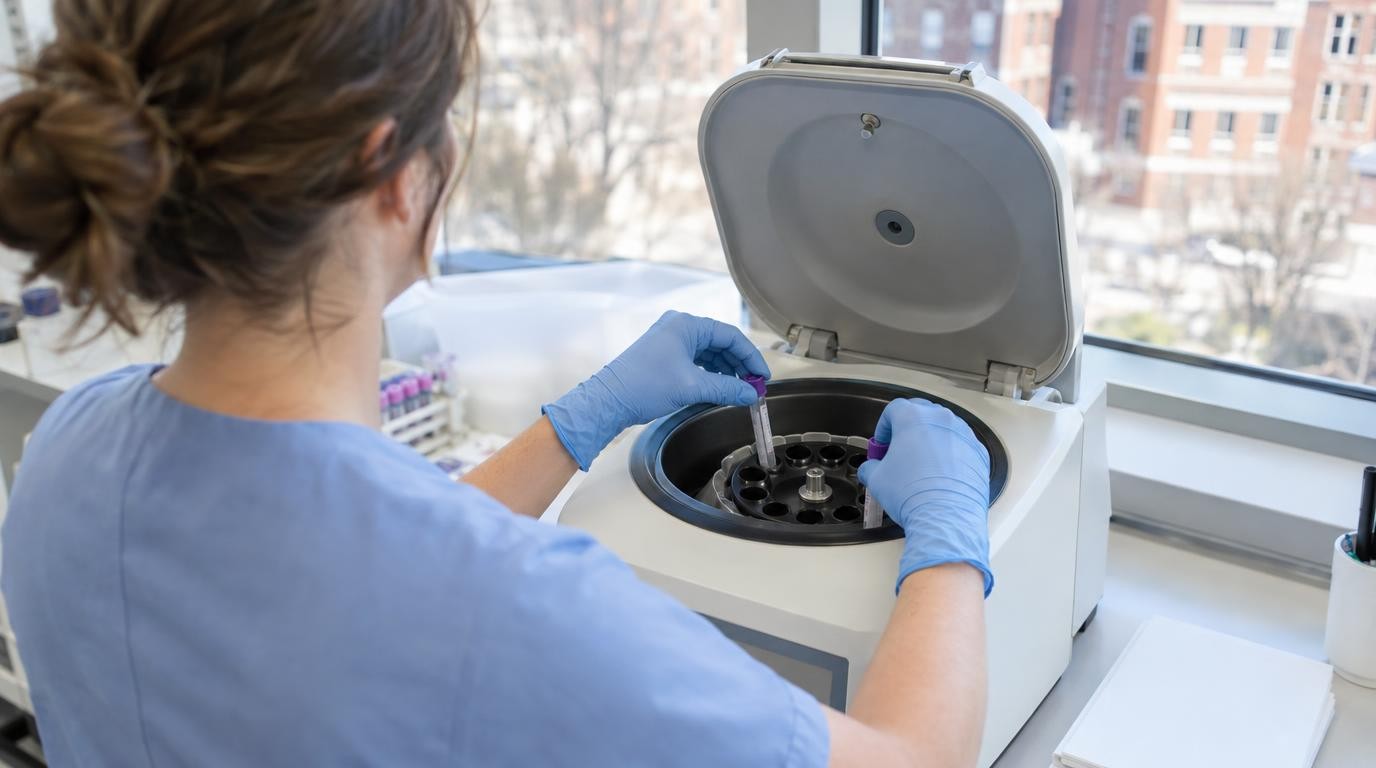
The O-Shot is a nonsurgical intimate application of platelet-rich plasma (PRP) prepared from your own blood. At Skinsational, treatment follows three steps:
- Blood draw: Our team collects blood from your arm to make the PRP.
- Concentration: A centrifuge separates and concentrates the platelet-rich portion.
- Targeted injection: After topical anesthetic, we inject the prepared PRP into selected external genital and anterior vaginal-wall tissues, including areas around the clitoris and G-spot.
Platelets contain growth factors, which provide a rationale for studying possible tissue effects. That rationale does not prove nerve regrowth or predict a change in sensation for an individual patient. The American Society of Plastic Surgeons’ explanation of O-Shots likewise describes PRP taken from the patient’s blood and injected into intimate tissues, while noting that more rigorous research is needed to understand effectiveness.
Who might consider intimate PRP injections?
Intimate PRP may be worth discussing for women concerned about reduced arousal, difficulty with orgasm, menopausal dryness, discomfort during intercourse or mild-to-moderate stress urinary leakage. At Skinsational, suitability depends on medical history, the symptom being addressed and realistic goals. The vaginal-atrophy trial did not test whether PRP relieves urinary leakage.
Someone primarily seeking PRP injections for vaginal dryness has a different goal from someone concerned about leakage when coughing or exercising. Our discussion of female libido enhancement and treatment expectations provides more context for separating these concerns.
What happens during treatment and the first day afterward?
You may feel pressure during the injections despite topical numbing. There is no physical downtime, but we recommend avoiding intercourse for 24 hours after treatment.
During a private assessment, Dr. Luciano Sztulman reviews your health history and whether the planned injection areas fit your concerns.
How long does it take for the O-Shot to kick in?
Our patients often report initial changes within a few days to a week, while fuller changes may take 3 to 8 weeks. The timing varies, and some people may notice no improvement. The featured trial measured outcomes at four months, so its findings cannot establish when an individual patient first notices a change.
How often do you need an O-Shot?
At Skinsational, treatment plans typically involve 1 to 3 sessions, based on individual goals and response. Our expectation is that any benefits may last 12 to 18 months, although this varies, and most patients opt for a yearly booster. An American Society of Plastic Surgeons article on intimate injections quotes a shorter estimate of six months to a year. The vaginal PRP trial assessed outcomes at four months, so it cannot establish how long benefits last or an evidence-based booster schedule. We reassess symptoms and goals before considering another session.
If your first treatment did not provide a meaningful benefit, do not assume a scheduled booster will help. For more about timing, see our guide to O-Shot results and maintenance.
What are the risks of intimate PRP, and who should postpone it?
Intimate PRP can cause injection-related tenderness, swelling, bruising or bleeding, and infection is possible. The American Society of Plastic Surgeons says patients typically do not experience pain afterward. Reliable complication rates for intimate PRP have not been established, so we cannot give a trustworthy percentage for bruising, bleeding or infection. Using your own blood does not remove risks from a blood draw or injection.
An active infection at an injection site calls for postponing treatment until it resolves. Bleeding concerns and blood-thinning medicines need individual review before treatment. The American Academy of Dermatology’s guidance on PRP for skin rejuvenation advises against PRP for people with hepatitis C, HIV/AIDS, any blood cancer, cardiovascular disease requiring a blood thinner, or skin cancer in the treatment area. That guidance concerns skin treatments, not an established list of O-Shot-specific contraindications. Tell Dr. Luciano Sztulman about these conditions so he can assess whether intimate PRP is appropriate for you.
Do not stop a prescribed blood thinner without medical guidance. Seek prompt medical care for fever, worsening redness or swelling, severe pain, heavy bleeding or other concerning symptoms after treatment. Cleveland Clinic’s Priapus Shot (P-Shot) overview also discusses the O-Shot, describing it as experimental and noting that research is insufficient to establish its effectiveness for vaginal conditions.
How does intimate PRP compare with other ways to address these symptoms?
For menopausal vaginal dryness, moisturizers or lubricants and, when appropriate after medical evaluation, local vaginal estrogen are more established options than experimental intimate PRP. For stress leakage related to pelvic-floor weakness, pelvic-floor exercises or physical therapy target muscles that PRP has not been shown to strengthen. Pain during intercourse needs an assessment of its cause before choosing a treatment. At Skinsational, we can discuss these options alongside PRP, other nonsurgical approaches or hormone-related recommendations based on your health history.
An evaluation helps identify the cause of your symptoms and which approach fits. Cleveland Clinic’s guidance on vaginal rejuvenation cautions that procedures aimed at genital appearance or feel may not correct an underlying problem, including a pelvic-floor issue. Our overview of nonsurgical vaginal rejuvenation evidence can help frame questions about these different approaches.
Frequently Asked Questions
What is O-Shot short for?
O-Shot is short for “orgasm shot,” a trademarked name for an intimate platelet-rich plasma (PRP) injection. The American Society of Plastic Surgeons explains that PRP comes from the patient’s own blood. The name describes the treatment’s intended purpose, not a guarantee that it will produce an orgasm.
What is the softest spot on a woman?
“Softest spot” is not a standard anatomical term, and there is no single spot with the same sensitivity for everyone. If you mean the G-spot, the American Society of Plastic Surgeons describes it as an erotic area inside the vagina near the urethra; sensitivity varies from person to person.
Is the O-Shot the same as the G-Shot?
No. An O-Shot uses platelet-rich plasma taken from your own blood, while a G-Shot uses a filler injected into the G-spot area, according to the American Society of Plastic Surgeons. G-Shot is also a trademarked name.
Can an O-Shot help if I have never had an orgasm?
The American Society of Plastic Surgeons says an O-Shot is unlikely to help someone who has never achieved orgasm. Preliminary evidence suggests it may enhance orgasms for some women, but that result is not predictable.
Does the O-Shot physically tighten the vagina?
Physical tightening is not an established O-Shot result. If the concern is a feeling of looseness, Cleveland Clinic explains that weak pelvic-floor muscles are often the underlying issue, which a vaginal rejuvenation procedure may not fix.
When should I review my O-Shot results with a clinician?
If you want to assess whether treatment helped, arrange a check-in after Skinsational’s 3-to-8-week window for fuller changes to compare your symptoms with your baseline. Contact us sooner if you have concerns. This is a practical review point, not a follow-up schedule established by the trial’s four-month assessment.
Did the PRP study find any quality-of-life changes?
Yes. In the BMC Women’s Health trial, the PRP group scored higher than the saline group on several quality-of-life measures after four months. For role limitations due to physical health, the scores were 52.5 ± 10.1 versus 25.8 ± 12.3.
What should you ask at a confidential PRP consultation?
- Which change would be meaningful to me: comfort, lubrication, sensation or another concern?
- How will we record my baseline and compare it with a later assessment?
- What can the vaginal-atrophy trial tell us about my situation, and what can it not tell us?
- What alternatives fit my main symptom, and when would repeat PRP make sense?
- What injection risks and first-day effects should I expect?
For someone coming from Lincoln, Rhode Island, a confidential visit at Skinsational Cosmetic Surgery Clinic in Providence offers time to discuss those questions with Dr. Luciano Sztulman and consider an individualized plan. Contact Skinsational Cosmetic Surgery Clinic to arrange a consultation if you would like to explore whether intimate PRP fits your goals, without assuming the trial’s average result will be your own.
This information is general and is not medical advice. Talk to a licensed clinician about your own situation before making a treatment decision.