
Last updated: October 17, 2026
Liposuction on arms removes localized upper-arm fat through small incisions and a thin suction cannula; it does not remove hanging skin or serve as a weight-loss treatment. If loose skin is the main concern, an arm lift may address what fat removal cannot. At Skinsational Cosmetic Surgery Clinic, we offer liposuction for the arms as part of an individualized contouring plan.
What Does Liposuction on Arms Remove?
Arm liposuction removes stubborn fat beneath the skin to refine the shape of the upper arms. The Mayo Clinic’s liposuction guidance identifies the arms as a treatment area and explains that liposuction is for contouring, not overall weight loss. Skin elasticity matters because remaining skin must settle over the new contour.
The distinction between fat and skin changes the choice of procedure. A full-looking upper arm with relatively firm skin presents a different concern from an arm with loose folds, even when both are described as excess arm fat.
Can arm liposuction tighten loose skin?
Arm liposuction does not cut away loose skin. Some skin may contract after fat removal, particularly when it has good elasticity, but substantial hanging skin can remain or appear more noticeable. An assisted liposuction technique may provide mild tightening in selected cases, but it is not a substitute for removing excess skin.
Who Is a Good Candidate for Arm Liposuction?
Arm liposuction may fit an adult with localized upper-arm fat that persists despite healthy habits, weight near a personal goal, and a desire for better contour rather than major weight loss. Skin quality and overall health also matter. Appearance alone cannot establish candidacy or predict how well the skin will adapt after fat removal.
During a private consultation, Dr. Luciano Sztulman reviews medical history, goals, anatomy, and skin laxity before recommending a plan. In clinical practice, distinguishing a fat deposit from a fold of excess skin is essential: removing fat cannot accomplish the same result as removing skin. Our guide to body-contouring candidacy, timing, and goals offers more context for that discussion.
When Is an Arm Lift a Better Fit Than Liposuction?
An arm lift, or brachioplasty, is generally a better fit when loose, sagging upper-arm skin is the main concern. The Cleveland Clinic’s brachioplasty overview explains that an arm lift removes excess skin and may include liposuction. These differences matter when comparing the procedures:
| Procedure | What it addresses | Incisions and limitation |
|---|---|---|
| Arm liposuction | Localized fat | Uses small incisions but does not remove hanging skin. |
| Arm lift | Excess skin and, when needed, fat | Requires a longer incision that leaves a scar. |
Skin laxity may become more apparent after substantial weight loss or as skin loses elasticity. An arm-lift scar may run along the inside or back of the upper arm; its length depends on how much skin is removed. By contrast, liposuction is directed at a fat deposit; choosing it solely to avoid an arm-lift incision may leave the primary concern unchanged. An article on the American Society of Plastic Surgeons’ site emphasizes assessing both the amount of excess skin and its elasticity.
Can an arm lift and liposuction be combined?
Yes. Liposuction can be used during brachioplasty when both excess fat and loose skin need treatment. Whether to combine them depends on the amount of fat and excess skin; combining them does not eliminate the arm-lift incision or scar.
For a small, stubborn fat deposit and good skin elasticity, nonsurgical fat reduction may also be worth discussing. The American Board of Cosmetic Surgery’s liposuction patient guide notes that nonsurgical methods generally produce less dramatic results than liposuction and may require multiple treatments. Dr. Luciano can assess which approach fits your anatomy and goals.
What is forearm lift surgery?
A conventional arm lift removes excess skin from the upper arm, between the shoulder and elbow, as Johns Hopkins Medicine’s description of brachioplasty explains. The forearm lies between the elbow and wrist. If loose forearm skin is your concern, it needs a separate assessment; upper-arm incisions and expected results should not be assumed to apply.
How Is Arm Liposuction Performed at Skinsational?
At Skinsational, arm liposuction begins with a private consultation and an individualized treatment plan. Dr. Luciano Sztulman reviews the treatment area and available techniques before deciding which approach, if any, fits your anatomy and goals. The steps below describe liposuction generally, not a fixed anesthetic or fluid protocol for every patient.
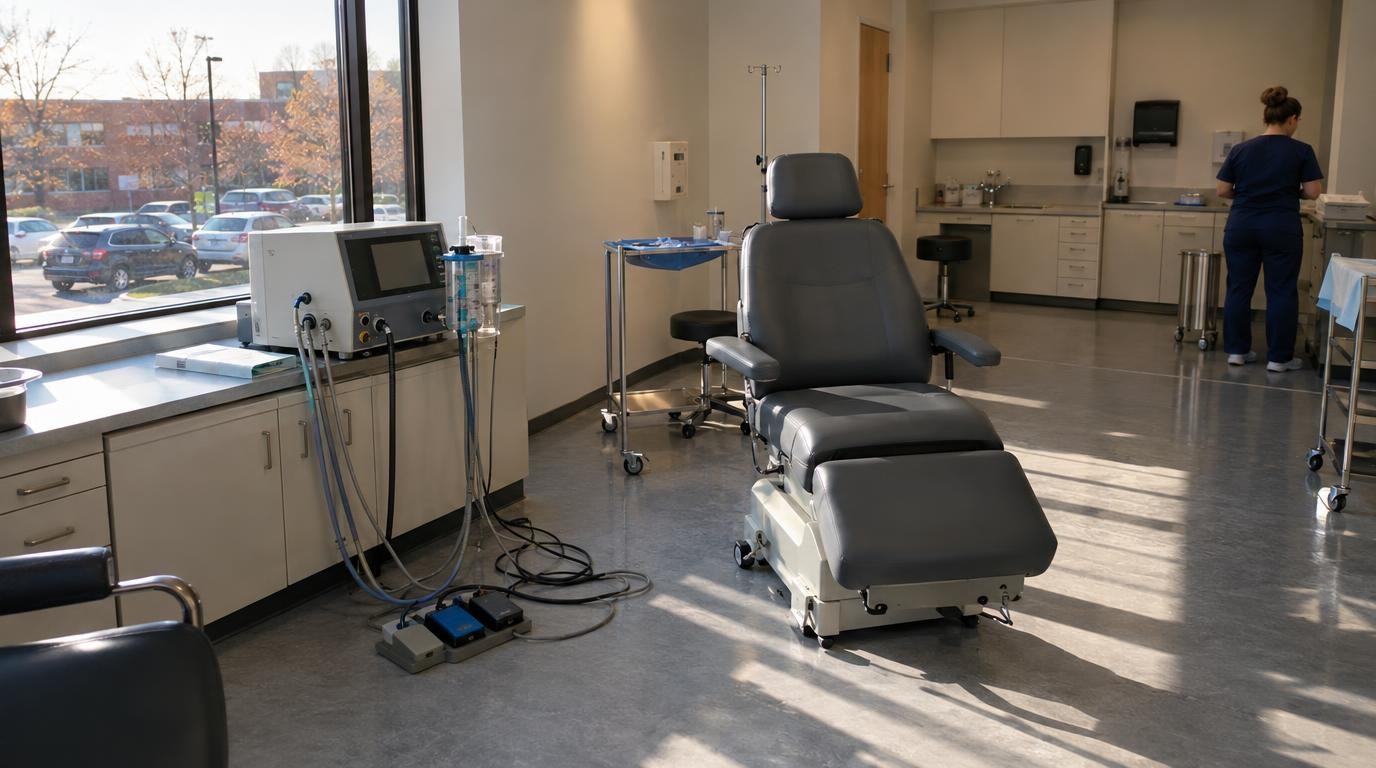
The basic sequence is:
- Mark the planned treatment areas, when needed.
- Use anesthesia to prevent pain during fat removal.
- For suction-assisted liposuction, inject a saline solution containing medicines to numb the area and narrow blood vessels before making incisions. The injected solution may differ with other techniques.
- Make small incisions in the planned treatment area.
- Pass a thin cannula connected to suction through the incisions to remove fat and refine the contour.
- Follow an individualized aftercare plan while swelling resolves and the contour becomes clearer.
What is the procedure for underarm fat removal surgery?
The underarm or armpit is a distinct area near the shoulder and chest, not the entire upper arm. Dr. Luciano would need to examine the fullness to determine whether it is a fat deposit or another type of tissue, whether liposuction is appropriate, and where any incisions would go. If the deposit is suitable for liposuction, the general steps involve anesthesia to prevent pain, small planned incisions, and suction of fat through a thin cannula; medicated fluid may be injected before the incisions, depending on the technique. An incision near the armpit for upper-arm liposuction does not establish the approach for treating fullness within the armpit.
Which liposuction technique might be used on the arms?
At Skinsational, we offer traditional liposuction, power-assisted liposuction, SmartLipo, and VASER. Power-assisted liposuction uses vibration to help remove fat; SmartLipo uses laser energy; and VASER uses ultrasound energy. Dr. Luciano chooses a technique according to the treatment area and plan; offering a technique does not mean it suits every arm. Our guide to liposuction techniques and how to choose explains the broader differences.
How Painful Is Arm Liposuction, and What Is Recovery Like?
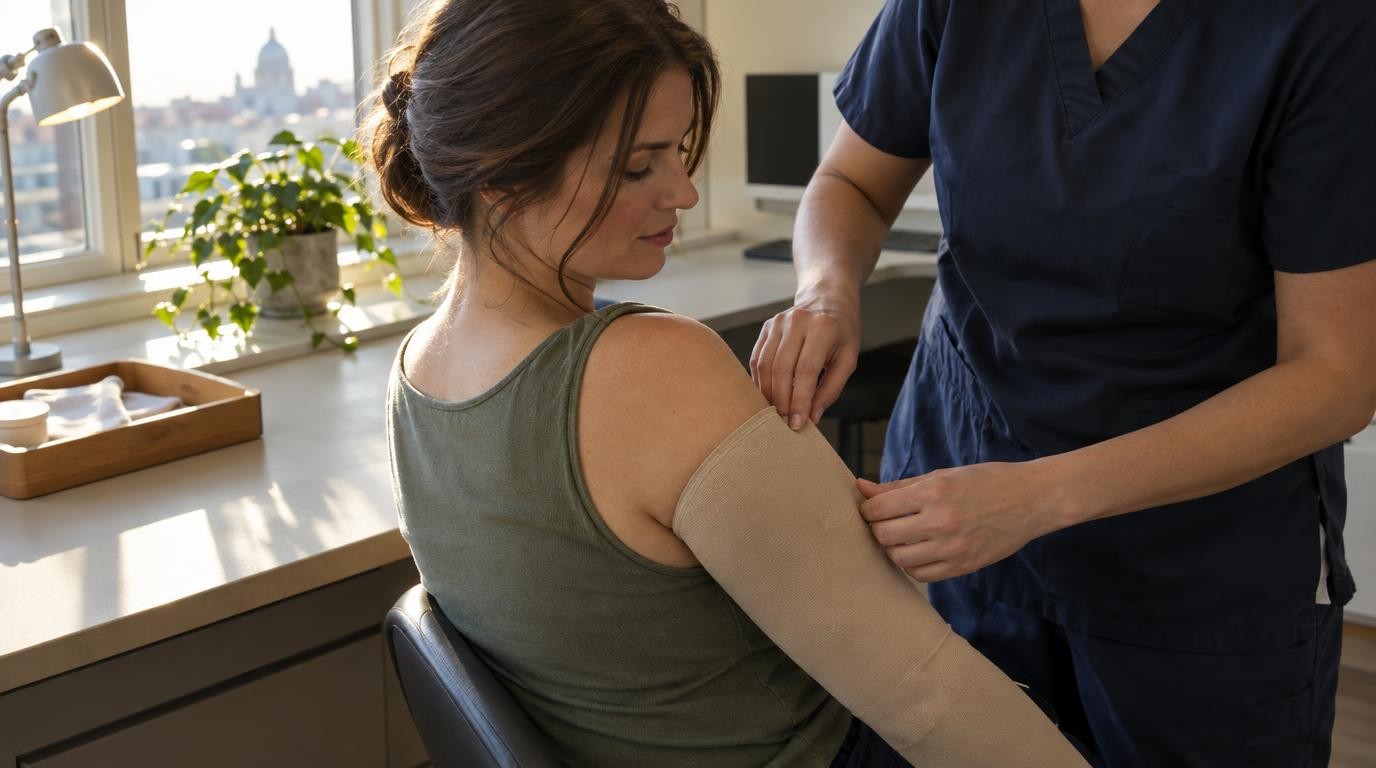
Arm liposuction can cause soreness, swelling, and bruising during early recovery, but no single pain level or recovery schedule applies to everyone. We use compression garments to support healing and recommend a gradual return to activities. The technique, extent of treatment, and individual healing determine arm-specific aftercare and activity restrictions.
How painful is arm liposuction?
With effective anesthesia, you should not feel pain during liposuction, as the Cleveland Clinic’s liposuction guidance explains. Soreness, tenderness, or a burning sensation may occur during the first few days. Mild discomfort can last as long as two weeks, according to the American Society for Dermatologic Surgery’s liposuction guidance. Medication and compression garments may help with discomfort and swelling.
When can you return to normal activities after liposuction?
Our general liposuction recovery guidance places a return to light daily activities at one to two weeks and most normal activities at weeks three to four. Healing and activity restrictions after arm liposuction vary; the table adds details to help you plan:
| Period | Our general liposuction recovery milestones |
|---|---|
| Weeks 1-2 | Swelling, bruising, and soreness may be present; patients wear a compression garment and return to light daily activities. |
| Weeks 3-4 | Swelling may decrease substantially, and many patients return to most normal activities. |
An article on the American Society of Plastic Surgeons’ site notes that patients can often return to work within a few days after upper-arm liposuction. That does not establish when strenuous lifting or exercise can resume.
What Results Can Arm Liposuction Achieve, and How Long Do They Last?
Arm liposuction can create a slimmer, more balanced upper-arm contour by permanently removing fat cells from the treated area. At Skinsational, we explain that the contour can last for many years if you maintain a stable weight and healthy lifestyle. Liposuction does not remove loose skin or produce major weight loss, so skin elasticity also affects the result. Remaining fat cells can enlarge with weight gain and change the contour.
For liposuction generally, we describe visible contour improvement in weeks 3-4 and a smoother, slimmer silhouette around months 2-3. These are not guaranteed deadlines for the arms: swelling can obscure the shape while healing continues.
What Are the Downsides and Risks of Arm Liposuction?
Beyond the swelling and bruising expected during recovery, risks include uneven contours, asymmetry, infection, bleeding, fluid buildup, blood clots, anesthesia complications, injury to deeper structures such as nerves or blood vessels, poor wound healing, possible revision surgery, and changes in sensation that may persist. Ultrasound-assisted liposuction, including VASER, also carries a risk of thermal burn or heat injury; that technique-specific risk does not apply equally to every form of liposuction. The American Society of Plastic Surgeons’ liposuction safety guidance lists these risks without giving upper-arm-specific rates. A systematic review of isolated cosmetic liposuction reported serious complications as rare (less than 0.1%), but that figure does not estimate the risk of any particular complication or of upper-arm surgery.
Discuss the risks, your medical history, and the expected limits of your result with your own clinician before proceeding. Seek urgent medical attention for chest pain, shortness of breath, fever, severe pain, or significant swelling; the Cleveland Clinic’s liposculpture recovery guidance identifies these as warning signs.
Who Should Avoid or Postpone Arm Liposuction?
Someone seeking major weight loss or primarily wanting hanging skin removed should not expect arm liposuction alone to meet that goal. If you anticipate substantial weight loss, talk with your clinician about postponing liposuction until your weight stabilizes, rather than planning a contour that further weight change may alter. Mayo Clinic notes that poor circulation, coronary artery disease, diabetes, or a weakened immune system can make liposuction more difficult. These conditions warrant an individual assessment rather than an automatic assumption of eligibility or exclusion.
Frequently Asked Questions
How long does upper-arm liposuction take?
A surgeon quoted in an article on the American Society of Plastic Surgeons’ site estimates one to two hours for upper-arm liposuction, usually as outpatient surgery. That is a general estimate, not a scheduled duration for your procedure; treating additional areas or combining procedures can change the time needed.
Where might arm-liposuction incisions be placed?
Small arm-liposuction incisions may be placed near the armpit or elbow, according to an article on the American Society of Plastic Surgeons’ site. Their locations depend on the area being treated, so ask Dr. Luciano where your incisions would be.
How long do you wear compression garments after arm liposuction?
There is no single compression schedule for every arm liposuction patient. An article on the American Society of Plastic Surgeons’ site quotes one surgeon who usually recommends one to two weeks and another who advises at least six weeks, sometimes longer. The duration depends on the procedure and healing.
Can arm exercises get rid of loose upper-arm skin?
No. Arm exercises can strengthen muscle, but they cannot remove excess upper-arm skin. Cleveland Clinic notes that exercise does not shrink hanging skin; an incision-based arm lift can remove it. If the fullness is localized fat rather than hanging skin, liposuction may improve the contour, but it will not remove excess skin.
When will I see the final results of arm liposuction?
A surgeon quoted in an article on the American Society of Plastic Surgeons’ site says final arm liposuction results typically take about three to six months to develop. Early swelling can make the arms look different from their eventual contour, so visible improvement is not necessarily the final result. Individual healing and skin elasticity affect how the contour settles.
Will arm liposuction remove cellulite or stretch marks?
No. Arm liposuction removes fat beneath the skin; it does not remove stretch marks or correct cellulite-related dimpling. Mayo Clinic distinguishes fat removal from treatment of these skin-surface concerns.
How Can You Choose the Right Arm-Contouring Plan in Providence?
Before choosing a plan, note whether the concern is on the upper arm or near the armpit and whether it involves fullness, hanging skin, or both. Your medical history, skin elasticity, goals, and willingness to accept an arm-lift scar and recovery time also matter.
If you are considering liposuction on arms, contact Skinsational Cosmetic Surgery Clinic in Providence, Rhode Island, to arrange a private consultation with Dr. Luciano Sztulman. Bring your questions about the precise treatment area, the result you hope to see, and recovery so our team can help you understand whether our liposuction service fits your goals.
This information is general and is not medical advice. Talk to a licensed clinician about your own situation before making a treatment decision.