
Last updated: October 13, 2026
Labiaplasty scarring is usually discreet once an incision heals, but surgery does leave a scar, and no surgeon can promise that it will be invisible. At Skinsational Cosmetic Surgery Clinic, our labiaplasty: cosmetic labia reduction and enhancement service begins with an individual assessment of anatomy, goals, and recovery expectations.
What does labiaplasty scarring usually look like?
Labiaplasty leaves an incision scar that often blends into the natural folds and contours of the labia minora after healing. Early swelling can make the incision more noticeable than the eventual scar. Scar visibility varies with incision placement, tissue healing, and individual anatomy, so a discreet scar is a reasonable goal, not a guaranteed result.
An article on the American Society of Plastic Surgeons’ website about labiaplasty recovery explains that scars often blend well with naturally folded labia minora tissue. Scar tissue may feel firm after stitches dissolve, then soften over several months.
Can you tell if someone has had labiaplasty?
Not necessarily. A healed incision may be difficult to distinguish from surrounding folds, but another person could notice a contour change or a visible scar. Appearance alone cannot reliably establish whether someone has had surgery, and no particular appearance is required for labia to be normal.
Where are labiaplasty incisions placed, and does technique change the scar?
Incision placement depends on the tissue being treated and the surgical approach chosen during an individual examination. For labia minora reduction, a trim incision follows an edge, while a wedge approach joins tissue across a removed segment. Dr. Luciano Sztulman plans incisions to minimize visible scarring without treating any technique as universally better.
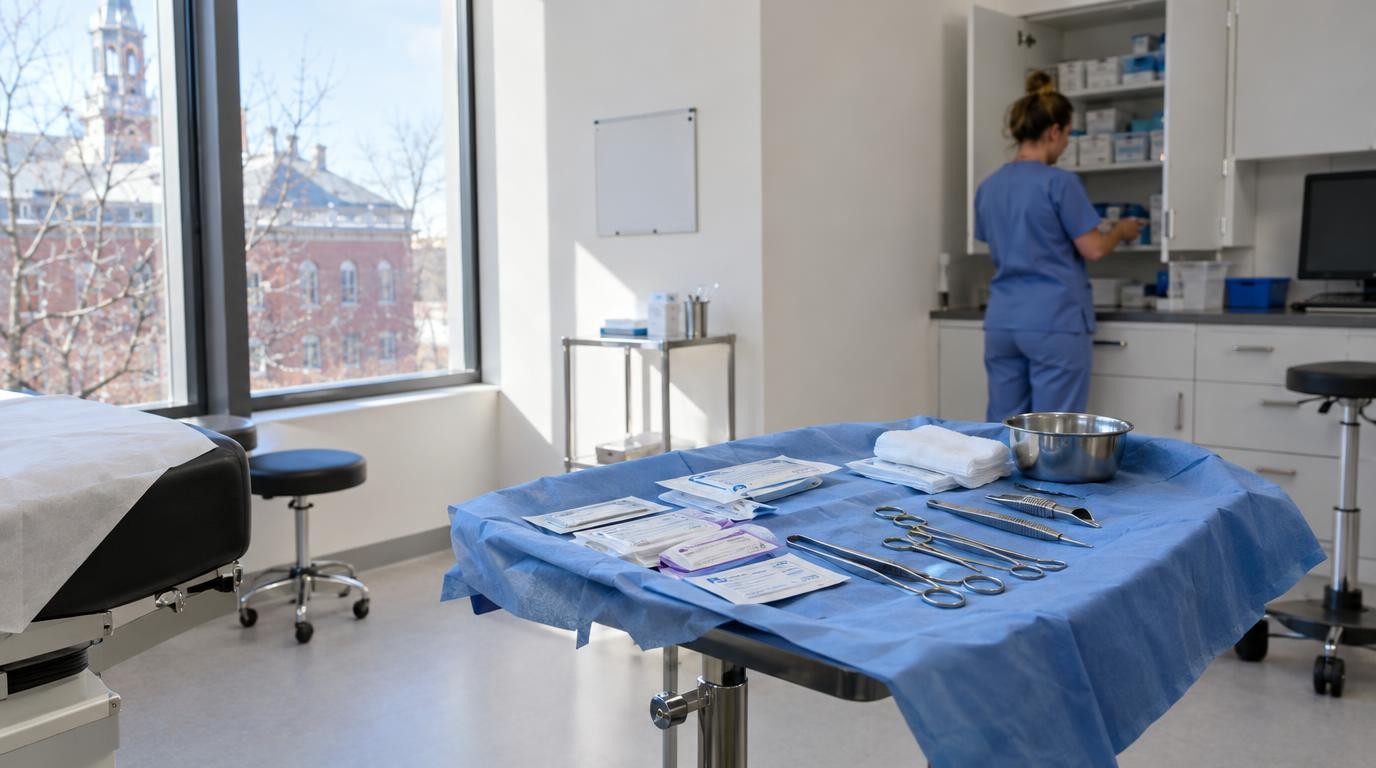
At Skinsational Cosmetic Surgery Clinic, Dr. Luciano examines the labial tissue and discusses the intended contour before recommending an approach. Incision placement is only part of the decision: the amount and shape of tissue removed, preservation of function, and reliable wound closure also matter. Our labiaplasty is an outpatient procedure often completed in under two hours. Depending on the procedure’s complexity and your preferences, it may be performed under local anesthesia with sedation or general anesthesia; we review the plan with you during your consultation.
How do trim and wedge labiaplasty scars differ?
With a trim technique, excess tissue is removed along the labial edge, placing the closure along that edge. With a wedge technique, a segment is removed and the remaining edges are joined, preserving more of the original border but creating a closure across the treated tissue. The American Society of Plastic Surgeons’ description of labiaplasty techniques explains both approaches; neither guarantees a hidden scar. Labia minora reduction typically leaves the inner lips shorter so they no longer extend below the hair-bearing labia majora. Most patients troubled by twisting or tugging generally find relief, although individual results vary.
The best placement depends on the patient’s anatomy and priorities, not a rule that one scar pattern always looks better. Our wedge versus trim labiaplasty guide and an educational comparison of wedge and trim approaches provide additional descriptions of the techniques.
Is scarring the same for labia minora reduction and labia majora enhancement?
No. Surgical labia minora reduction creates an incision that heals as a scar. Labia majora enhancement addresses the outer labia and may involve fat grafting or filler injections; using dermal filler in the labia is off-label, and injection into a blood vessel can cause tissue injury. The scar expectations for a minora reduction should not be applied automatically to an enhancement procedure.
How long until labiaplasty looks normal?
Most swelling is gone after six weeks, while final results may take four to six months as remaining swelling resolves, according to Cleveland Clinic’s labiaplasty guidance. There is no single day when the area suddenly looks healed; bruising and remaining swelling can affect its appearance along the way. Feeling ready for light work, receiving clearance for activities, and seeing the eventual appearance are different recovery milestones.
The longer timeline describes when results settle, not a required wait before every routine activity. Labia minora reduction is generally intended to be a one-time, long-lasting procedure, although later tissue changes or complications may require further treatment.
What should you expect during the first week after labiaplasty?
According to an article on the American Society of Plastic Surgeons’ website, swelling generally peaks 2 to 3 days after labiaplasty, then subsides over the following weeks. Bruising and tenderness can also make it difficult to judge the final scar during the first week. At Skinsational Cosmetic Surgery Clinic, we manage early discomfort with prescribed oral pain medication, ice packs, and gentle care.
When can you return to work, exercise, and sex after labiaplasty?
Skinsational Cosmetic Surgery Clinic uses the following recovery milestones for its labiaplasty patients; an individual plan may differ according to healing and the demands of an activity.
| Activity or change | Clinic guidance | What the milestone means |
|---|---|---|
| Light, non-strenuous work | Skinsational Cosmetic Surgery Clinic: 3 to 5 days | A physically demanding job may require more time. |
| Swelling and bruising | Skinsational Cosmetic Surgery Clinic: settle over several weeks | The early appearance is not the final contour. |
| Strenuous exercise, cycling, and intercourse | Skinsational Cosmetic Surgery Clinic: avoid for 6 to 8 weeks | Wait for the clearance specified in your recovery plan. |
Returning to work does not mean an incision is ready for friction or pressure from cycling, exercise, or sex. Scar appearance can keep changing after activity restrictions end.
What does the 2024 research say about labiaplasty scars?
The 2024 systematic review and meta-analysis in Aesthetic Surgery Journal does not establish how often labiaplasty scars remain visible; it reported 94% pooled overall satisfaction and an 8% wound-separation estimate for wedge resection. Neither measure establishes long-term scar visibility or predicts your result.
The table gives the review’s study-selection details, additional estimates, and confidence intervals.
| Measure | Finding | Source and scope |
|---|---|---|
| Search and study selection | 3,954 records identified; 86 eligible studies included; 53 supplied quantitative data | 2024 Aesthetic Surgery Journal review |
| Overall satisfaction | 94% (95% confidence interval, 93% to 95%) | 2024 Aesthetic Surgery Journal review; pooled across methods |
| Deepithelialization satisfaction | 97% (95% confidence interval, 85% to 99%) | 2024 Aesthetic Surgery Journal review; technique-specific estimate |
| Wound separation after wedge resection | 8% (95% confidence interval, 5% to 13%) | 2024 Aesthetic Surgery Journal review; wedge-resection estimate |
The review did not establish how often a scar remains visible or whether satisfaction was identical across techniques. Satisfaction asks a broader question about a patient’s result; it does not measure whether an incision becomes invisible. Our guide to labiaplasty research and outcomes provides further context for discussing evidence alongside personal goals.
Does wound separation mean a permanent visible scar?
No. Wound separation means the incision edges have opened during healing; permanent scar appearance is a later outcome. Separation needs assessment because it may affect healing, but the review’s wound-separation estimate cannot be converted into a permanent-scar rate. The eventual appearance depends on how the wound heals and the care it requires. The American Society of Plastic Surgeons notes that healing problems are more likely with a wedge procedure, particularly with exposure to substances that constrict blood vessels. Tell Dr. Luciano about nicotine, medications, and other substances you use so we can discuss whether they could impair healing.
How should you care for labiaplasty incisions while they heal?
Labiaplasty wound care starts with the personalized instructions provided for your incision, medication, and activity limits. Keep follow-up appointments, use prescribed pain relief and ice packs as directed, and avoid pressure or friction before clearance. Gentle care supports healing, but no cream or home technique can guarantee an inconspicuous scar.
Our recovery guidance asks patients to avoid strenuous exercise, cycling, and intercourse for 6 to 8 weeks. Skinsational Cosmetic Surgery Clinic sets those restrictions to give the treated tissue time to heal; returning early can place pressure on an incision. Loose clothing may also reduce friction, as Cleveland Clinic advises. Our cosmetic surgery recovery guide offers broader preparation tips, while your procedure-specific instructions take priority.
What should you avoid putting on a healing labiaplasty incision?
Do not start scar creams, ointments, pads, or other products on an unhealed incision unless your surgical team approves them. A product suitable for intact skin may not be appropriate for a healing wound.
Which healing changes should prompt a call to your surgeon?
Contact the surgical team promptly if pain is worsening instead of improving, redness is spreading, fever develops, drainage seems unusual, or the wound opens. Those changes deserve assessment rather than a new over-the-counter product or an attempt to close the wound yourself. If symptoms are severe or you cannot reach the team, seek urgent medical care.
What are the downsides of labiaplasty?
Labiaplasty has surgical risks even when most patients in published research report satisfaction. Possible downsides include wound separation, infection, bleeding, asymmetry, persistent tenderness, conspicuous or painful scarring, and changes in sensation. Removing too much tissue can also cause lasting discomfort. A careful plan aims to protect function and sensation but cannot guarantee either outcome.
The American Society of Plastic Surgeons’ labiaplasty page identifies over-resection as the most common complication and warns that it can cause chronic dryness, scarring at or near the vaginal opening, and pain with intercourse. Cleveland Clinic also lists wound breakdown, ongoing pain, and loss of sensitivity as possible complications. In clinical practice, discussing the amount of tissue to be removed matters as much as discussing where the incision will sit.
The Aesthetic Surgery Journal review found complications were generally uncommon, although the frequency of individual complications varied by technique. High satisfaction in a group does not remove an individual patient’s risk. Discuss your health, healing history, and these trade-offs with your own licensed clinician before deciding on surgery.
Can labiaplasty affect sensation or leave a painful scar?
Yes, although a change in sensation or a painful scar is not an inevitable result. Dr. Luciano Sztulman plans labiaplasty to preserve function and sensitive tissue while addressing the patient’s concerns. Persistent pain, discomfort with intercourse, or altered sensitivity warrants evaluation rather than an assumption that the symptom is a normal part of recovery.
What is the best age for labiaplasty if scarring is a concern?
There is no universal best age that prevents labiaplasty scarring. At Skinsational Cosmetic Surgery Clinic, we consider physically mature adults with functional discomfort or aesthetic concerns, good overall health, and realistic expectations. Cleveland Clinic reports that most people who have labiaplasty are ages 18 to 50; that describes patients, not an ideal age range. An American Board of Cosmetic Surgery article about adolescent labiaplasty advises generally postponing cosmetic surgery until adulthood because labial tissue may still be developing. A teenager with pain or functional problems should speak with their pediatrician or family doctor.
A consultation can establish whether the concern is protrusion, chafing, asymmetry, or appearance and whether surgery is likely to address it. Normal labia vary considerably in shape and size; an examination is an opportunity to consider that range without pressure to change it. If appearance is your only concern, choosing no surgery is an option. For chafing or irritation, discuss looser clothing and other ways to limit friction with a clinician, along with whether your symptoms need further assessment. Conservative measures may ease discomfort, but they do not remove tissue or create a surgical contour. Our guide to deciding on intimate cosmetic surgery offers questions to consider beforehand.
Who should postpone or reconsider labiaplasty?
Patients who are pregnant or planning pregnancy in the near future should discuss postponement. Poor overall health, concerns about healing, or expectations that surgery can produce a scar-free or precisely matched appearance also call for a fuller discussion before proceeding.
What if a labiaplasty scar remains raised or painful?
A labiaplasty scar that remains raised, painful, or bothersome deserves an examination, especially if symptoms persist after early swelling has settled. An early change is not necessarily the final result; evaluation can identify the cause and guide an appropriate next step.
Persistent tenderness may have more than one cause, and appearance alone cannot establish what is happening beneath the surface. Avoid trying to flatten or treat a symptomatic scar without guidance while the tissue is healing.
When might labiaplasty revision be considered?
Labiaplasty revision may be considered after an examination identifies a persistent contour concern, a bothersome scar, or another problem that a further procedure could reasonably address. Healing and scar maturation take time, and additional surgery would create new healing tissue. A revision decision therefore depends on the cause of symptoms and a realistic discussion of possible benefits and risks; revision cannot promise a scar-free result.
Frequently Asked Questions
When do labiaplasty stitches dissolve?
Dissolvable labiaplasty stitches are typically gone within 3 to 4 weeks, according to an article on the American Society of Plastic Surgeons’ website. If a stitch irritates the wound, ask our team to check it rather than pulling it yourself.
How should you wash a healing labiaplasty incision?
Follow the cleansing instructions we give you for your incision. An American Society of Plastic Surgeons article about postsurgical care advises avoiding long showers and patting the wound dry after washing rather than rubbing it. Ask our team if you are unsure how to clean the area without disturbing the incision.
Is itching around a labiaplasty incision normal?
Some itching is common during the first week of labiaplasty healing, according to an article on the American Society of Plastic Surgeons’ website. Itching that persists should be assessed because it could indicate an infection or a reaction to medication. Do not apply pads, creams, or other products to the incision without your surgical team’s approval.
Is light bleeding normal after labiaplasty?
Minor bleeding can occur for up to a week or so after labiaplasty, according to Cleveland Clinic, which notes that a pad can absorb it. If bleeding seems heavy, increases, or concerns you, contact your surgical team for advice.
Does laser labiaplasty leave less scarring than a scalpel?
There is no established guarantee that laser labiaplasty leaves a less visible scar than scalpel surgery. The 2024 systematic review found more bleeding, swelling, and hematomas with scalpel techniques than with laser techniques, but those findings do not measure final scar visibility. Incision placement and individual healing still matter.
Can pregnancy or childbirth change labiaplasty results?
Yes. Pregnancy and childbirth can stretch labial tissue and change its appearance after a labiaplasty, although the effect varies from person to person. Cleveland Clinic notes that patients may want to wait until they are finished having children.
How can a consultation clarify your personal scarring risk?
A private labiaplasty consultation connects general scar information to your anatomy, goals, and healing history. Dr. Luciano Sztulman can examine the labial tissue and any existing scars, compare appropriate incision approaches, and review recovery restrictions and surgical risks. We can also review before-and-after images to discuss your desired size and shape and establish shared expectations.
If you are considering labiaplasty or want an existing scar evaluated, contact Skinsational Cosmetic Surgery Clinic to arrange a private consultation with Dr. Luciano Sztulman in Providence, Rhode Island. You can explain what concerns you most, ask how the proposed approach places the incision, and leave with a clearer understanding of healing and possible outcomes.
This information is general and is not medical advice. Talk to a licensed clinician about your own situation before making a treatment decision.