Last updated: November 10, 2026
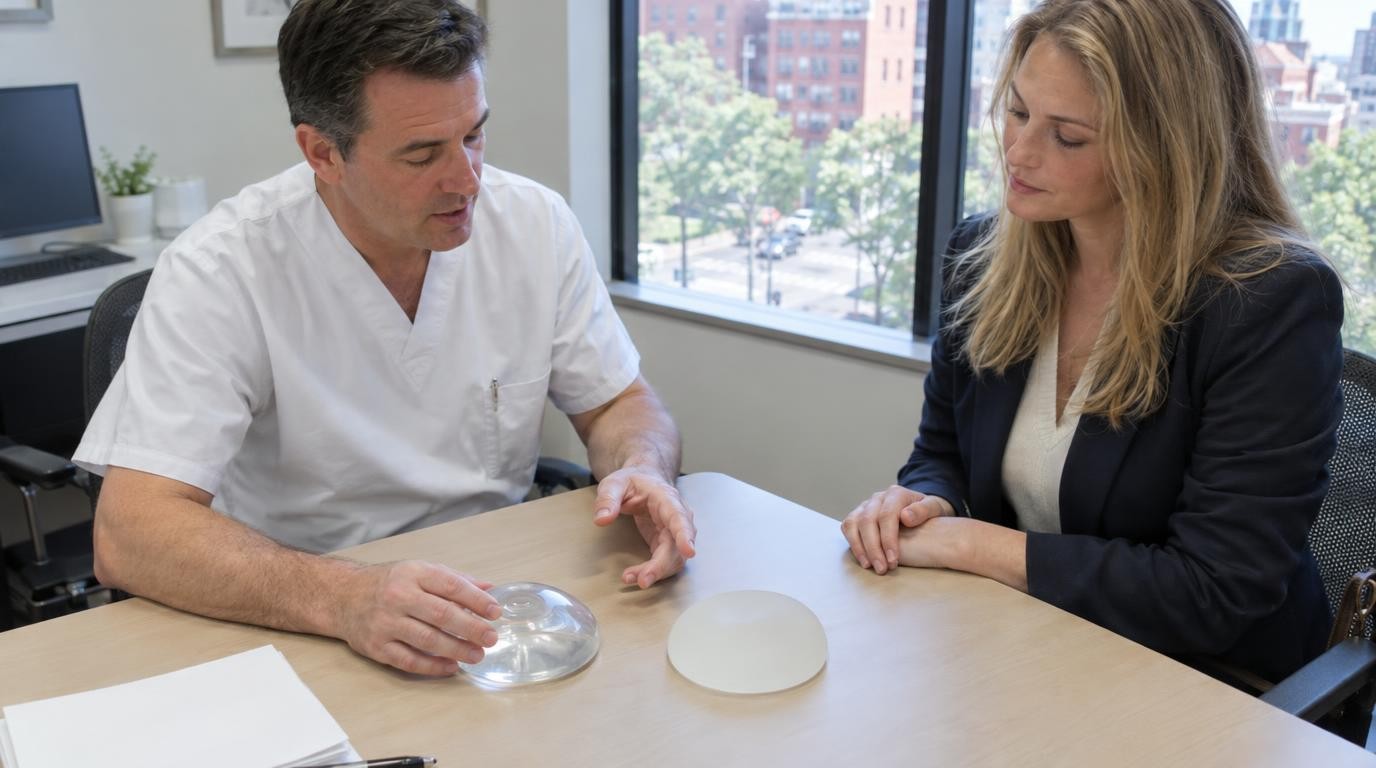
Breast augmentation with lift combines implants for added fullness with a lift that removes excess skin, reshapes breast tissue, and raises the breasts. If you have both lost upper-breast volume and developed sagging, an in-person examination can determine whether you may benefit from both procedures or only one.
What Is Breast Augmentation With Lift, and What Does It Change?
Breast augmentation with lift, also called augmentation mastopexy, addresses breast volume and breast position together. Implants add fullness, while a lift removes excess skin and reshapes and elevates the breasts. Cleveland Clinic explains that the procedures can be combined, and an article on the American Society of Plastic Surgeons website describes the lift as removing excess skin and tightening tissue.
At Skinsational Cosmetic Surgery Clinic in Providence, we offer breast augmentation and breast lifts. The procedures address different concerns and may be considered together when both added fullness and repositioning are needed.
Can Breast Implants and a Lift Be Done in One Operation?
Yes, implants and a lift can be performed during the same operation for an appropriate patient. Cleveland Clinic notes that a surgeon may instead plan separate operations in certain cases. The choice depends on the breast tissue, the amount of reshaping needed, and the surgical plan developed after an examination.
Is There a Difference Between a Breast Lift and Breast Implants?
Yes. Breast implants primarily add size, fullness, and projection; a breast lift primarily changes position and shape by removing excess skin and reshaping existing tissue. A lift does not substantially increase breast size, while implants alone cannot reliably correct substantial drooping. The distinction matters when deciding whether lost volume, sagging, or both are driving your concern.
An article on the American Society of Plastic Surgeons website distinguishes added volume from correction of sagging in its discussion of augmentation versus a lift. For a closer look at the distinction, see our guides to breast implants without a lift and a breast lift without implants.
Can You Provide an Example of a Breast Lift?
Consider a patient who likes their breast size but finds that the breast tissue and nipples sit lower than desired. If the examination shows moderate sagging, a vertical, or “lollipop,” lift may be an option. The surgeon makes an incision around the areola and down to the breast crease, removes excess skin, and reshapes the existing tissue without adding an implant. The American Board of Cosmetic Surgery describes this incision pattern for moderate sagging.
When Might Implants Alone or a Lift Alone Be Enough?
Someone who wants more upper-breast fullness without significant drooping might discuss implants alone. Someone with adequate natural volume who mainly wants to address sagging might discuss a lift alone. If both concerns are present, implant size cannot simply substitute for removing loose skin and repositioning the breast.
Fat-transfer breast augmentation adds volume using a patient’s own fat instead of an implant. Cleveland Clinic identifies it as another type of augmentation. Fat transfer alone does not remove excess skin or reposition significantly sagging breasts. Our breast augmentation service uses implants; a surgeon who offers fat transfer can assess whether it suits your goals.
If you want smaller, lifted breasts rather than added volume, breast reduction may be a better option than implants. Reduction can be performed with a lift; ask a surgeon who offers reduction whether it suits your goals.
How Can You Tell Whether You Might Need Both Procedures?
You might need both procedures if you want more breast fullness and your skin or tissue has sagged enough to require reshaping. An in-person examination considers nipple position relative to the breast crease, skin laxity, existing volume, asymmetry, and your goals. No single observation at home establishes which operation is appropriate.
“Deflated breasts” can describe volume loss, loose skin, or both. For patients who have lost volume after pregnancy or weight loss, our augmentation planning with Dr. Luciano Sztulman considers height, weight, tissue characteristics, and desired implant size. Breast position and skin laxity also matter when deciding whether a lift is needed.
What Do Ptosis Grades Tell a Surgeon?
Ptosis is the clinical term for breast drooping. In a commonly used grading system, grade I places the nipple at or slightly below the breast crease; in grade II, it sits below the crease but above the breast’s lowest point; and in grade III, it sits at the breast’s lowest point. A grade does not determine treatment by itself: skin quality, tissue volume, asymmetry, and your desired result also matter.
Does the Pencil Test Tell You Whether You Need a Lift?
No. An article on the American Society of Plastic Surgeons website says that a pencil held beneath the breast fold can suggest drooping and that a nipple below the pencil can suggest more significant drooping. The observation cannot establish a clinical ptosis grade, evaluate skin quality, or determine whether implants, a lift, or both are appropriate.
How Are Implants and a Breast Lift Planned Together?
Planning a possible combined operation includes these steps:
- Assess existing breast volume, nipple position, skin quality, and the amount of lifting needed.
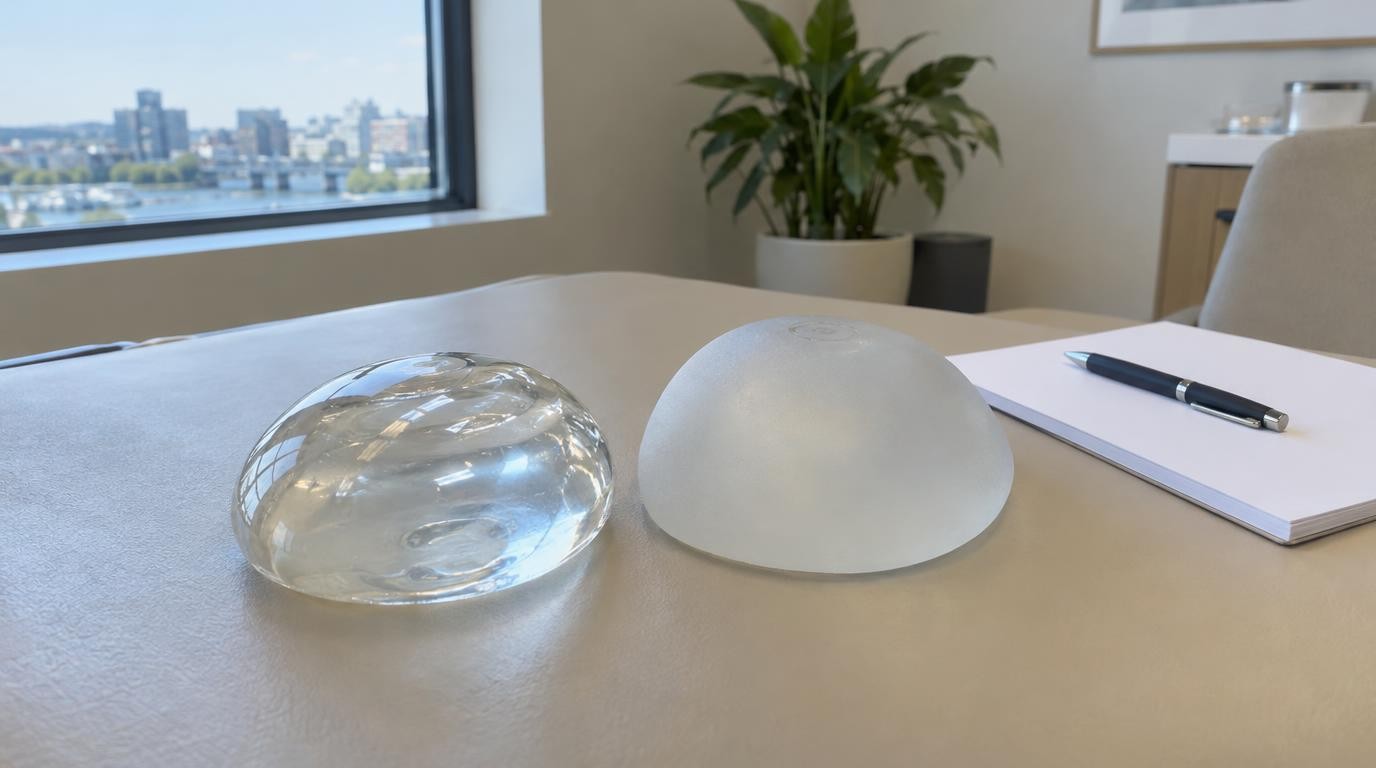
- Select an implant type and size based on tissue characteristics, proportions, and desired fullness.
- Plan how to remove excess skin, reposition the breast and nipple, and place the incisions.
- Choose anesthesia and recovery instructions for the complete operation rather than assuming an augmentation-only plan applies.
For additional background on combined and separate procedures, see this educational guide to breast augmentation with lift options.
How Would Implant Type and Incision Placement Be Decided?
Our augmentation options include saline and silicone breast implants, including FDA-approved Mentor options. Implant size is selected with your proportions, tissue characteristics, and desired outcome in mind. We place implants beneath the breast tissue or chest muscle. For some patients with mild sagging, a lift incision around the areola may be enough; moderate sagging may call for a vertical incision down to the breast crease. More extensive lifting may require an inverted-T incision that also runs along the crease. Your examination—not a ptosis grade alone—determines which approach can provide the reshaping you need.
Lift incision lines are permanent but generally fade over time. For more on their placement and healing, see our guide to breast lift incisions and healing.
Would the Clinic’s Usual Augmentation Approach Apply to a Combined Surgery?
Not necessarily. We commonly use an underarm incision for augmentation, but a lift may require incisions on the breast to remove excess skin and reposition the nipple. An underarm implant incision does not eliminate the need for lift incisions, and anesthesia for a combined operation may differ from anesthesia for augmentation alone.
How Painful Is a Breast Lift and Augmentation?
Expect some soreness, chest tightness, and swelling after a combined lift and augmentation, although discomfort varies. An American Society of Plastic Surgeons article about augmentation recovery describes early augmentation-only pain as sometimes feeling like substantial workout-related chest soreness, particularly the morning after surgery. A surgeon quoted there notes that recovery can be longer and more painful when implants are placed beneath the chest muscle. Your experience after a combined operation may differ with implant placement, the extent of lifting, and your individual response; no universal pain score applies.
Mayo Clinic notes that after a lift, swelling and bruising usually last about two weeks, while numbness of the nipples, areolas, or breast skin might last about six weeks. Incisions may also be painful or sore.
What Should You Ask About Anesthesia and Discomfort?
Ask your surgeon which anesthesia is recommended for the complete lift-and-implant operation and why, how pain will be managed afterward, and whom to call if pain worsens or is not controlled. For augmentation alone, most of our patients receive local anesthesia with sedation; some require deeper sedation. Mayo Clinic notes that a breast lift may use local anesthesia with sedation or general anesthesia. The plan for a combined operation must account for both procedures.
How Long Does Recovery Take After Breast Augmentation With Lift?
The American Board of Cosmetic Surgery lists approximately four to six weeks for full recovery after a breast lift alone. That is not a recovery estimate for a combined operation: your implant placement and the extent of lifting can change your activity restrictions and follow-up needs. For augmentation alone, we advise early rest and a support bra, followed by a gradual return to activity. Your surgeon will give you a timeline for your complete procedure.
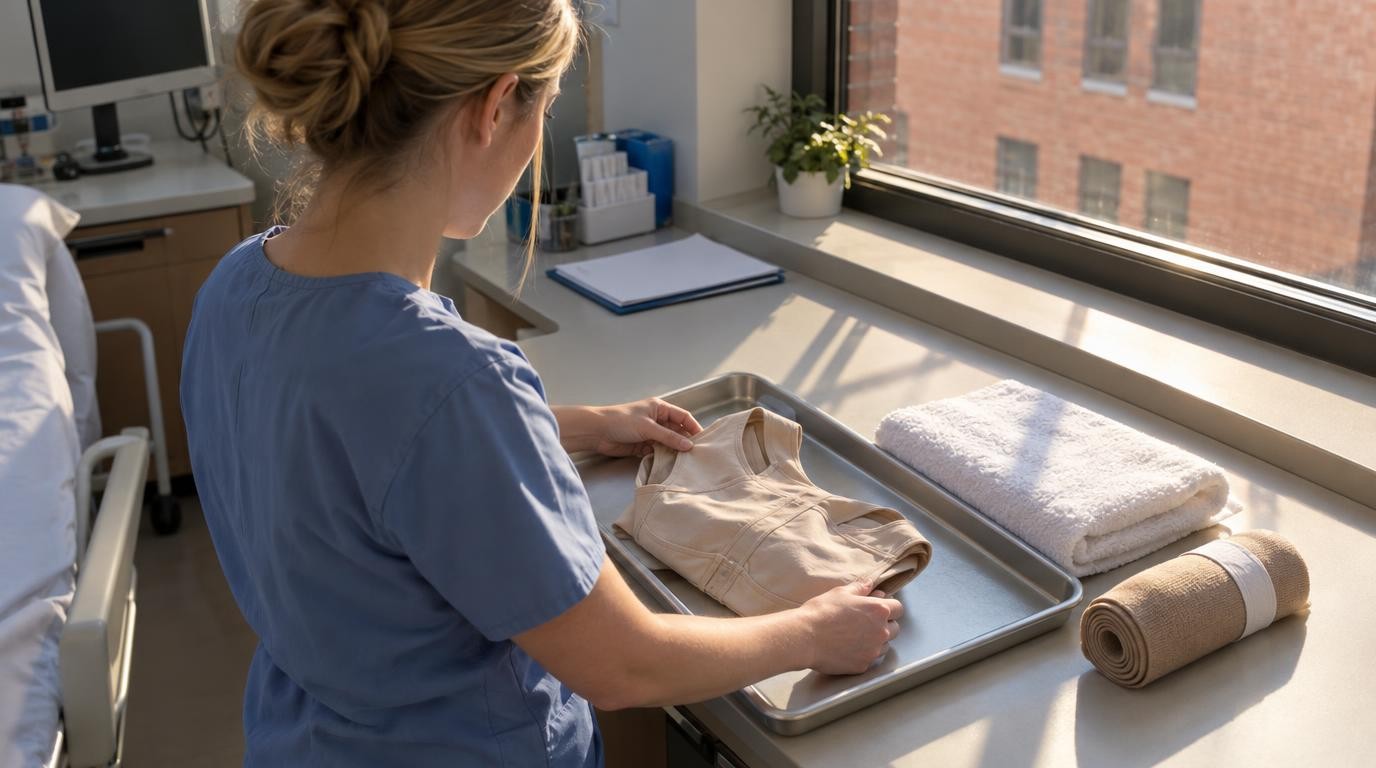
The following milestones come from Skinsational’s guidance for augmentation alone, not a promised schedule for a combined procedure.
| Skinsational augmentation-only period | Published activity guidance |
|---|---|
| Skinsational: first 24-48 hours | Rest, limit movement, and wear a support bra at all times. |
| Skinsational: first week | Keep activity light; most discomfort improves after 2–3 days. |
| Skinsational: weeks 1-2 | Daily tasks often resume; avoid strenuous activity. |
| Skinsational: week 4 onward | Return gradually to exercise and fuller activity unless directed otherwise. |
When Can You Resume Daily Activities and Exercise?
After a breast lift, many patients return to desk work within the first week, depending on their job, and exercise beyond walking is limited for the first 2–6 weeks, according to the American Board of Cosmetic Surgery. A combined operation may require a different timeline from either procedure alone.
How Long Do Breast Lift and Augmentation Last Before Sagging Again?
There is no fixed point at which a lift and augmentation will sag again. An article on the American Society of Plastic Surgeons website notes that some lift results are long lasting, while others may call for minor revision after only a few years. The American Board of Cosmetic Surgery’s implant-revision guide estimates that most implants last about 10–15 years before future maintenance may be needed; they are not lifetime devices. That estimate is neither a date when sagging must recur nor an automatic deadline for implant replacement.
Cleveland Clinic notes that lift results are visible immediately, while breast shape and position continue to settle over the next few months.
What Can Change the Results Over Time?
Mayo Clinic notes that larger, heavier breasts are more likely to sag again as skin loses elasticity with age. Pregnancy and weight changes can also affect breast position. Maintaining a stable, healthy weight may help preserve lift results, but cannot guarantee them.
What Are the Risks, and Who Might Not Be a Good Candidate?
Swelling, bruising, and soreness are expected during healing, and some nipple or breast-skin numbness may be temporary. Lift scars are permanent, although they generally fade. Complications are possible, not inevitable; ask your surgeon for estimates tailored to your health and planned procedures rather than relying on a generic percentage. Pregnancy or breastfeeding plans, uncontrolled medical conditions, nicotine use, and expectations surgery cannot meet may affect candidacy or timing.
Discuss your health history and these risks with your own clinician before deciding on surgery. Contact your surgical team promptly for fever, worsening redness, or unusual drainage after an operation. If one breast swells rapidly, contact your surgical team and seek urgent medical assessment because this could signal bleeding. Seek urgent medical care for chest pain or difficulty breathing.
Which Risks Come From the Lift, and Which Involve Implants?
Possible lift-related complications include bleeding, infection, wound-healing problems, lasting nipple-sensation changes, and asymmetry; anesthesia also carries risks. Implants add the risks of displacement, rupture, and future surgery. A scar-tissue capsule normally forms around an implant, but MedlinePlus explains that a capsule that thickens can change breast shape or cause firmness or pain. This complication is called capsular contracture.
What Should You Ask at a Breast Augmentation Consultation in Providence?
At your consultation, ask: Would implants, a lift, or both best address my goals? If both, is a same-day operation offered and appropriate for me, or would separate operations be preferable? Which implant type, size, and placement and which lift incisions do you recommend, and why? What anesthesia, recovery restrictions, follow-up, and risks would apply to my plan? At Skinsational Cosmetic Surgery Clinic in Providence, Rhode Island, Dr. Luciano Sztulman can discuss your goals and anatomy with you.
How Will the Surgeon Assess Sagging, Volume and Implant Options?
We examine the position of your nipples and areolas relative to the breast crease, skin quality, existing volume, and differences between the breasts. We also discuss the size and shape you want. Those findings guide whether lifting, implants, or both may be appropriate, how much reshaping is needed, and which implant options fit your anatomy.
Is a Combined Lift Available, and What Happens if It Is Not?
We offer breast augmentation and breast lifts, but that does not establish whether both are performed together in one operation at Skinsational. A combined operation requires a plan for both implant placement and lift incisions. When a single operation is not appropriate, the procedures can be staged.
Frequently Asked Questions
Can I breastfeed after a breast lift with implants?
Breastfeeding may still be possible, but surgery can affect milk production. Cleveland Clinic notes that implant incisions around the areola are more likely to reduce milk production, while implants placed below the muscle usually affect it less. These choices matter if future breastfeeding is a priority.
How long should I wait after breastfeeding to get a breast lift with implants?
Surgeons suggest waiting about six months to a year after you stop breastfeeding before a breast lift, according to Mayo Clinic. That gives the breasts time to return to a stable shape and size before implant size and the amount of lifting are planned.
Can a breast lift with implants improve uneven breasts?
Sometimes. A lift can address differences in breast position, while implant choices can address differences in volume. Surgery cannot guarantee perfectly matching breasts. An examination can help identify which differences may remain.
Can I get a mammogram after breast implants and a lift?
Yes, you can have a mammogram after breast implants and a lift. Tell the imaging center about your implants when scheduling: MedlinePlus explains that additional views are required to help visualize breast tissue around implants.
Can a breast lift make my areolas smaller while adding implants?
Yes, some breast lift techniques can reduce areola size while implants add volume. The American Board of Cosmetic Surgery notes that a periareolar lift can help reduce areola size and is commonly performed with augmentation. It is often suited to mild sagging; more extensive sagging may require a different incision pattern.
Can I have a breast lift if I already have implants?
Yes, a lift may be combined with surgery to exchange, reposition, or remove existing implants when sagging skin or tissue laxity is a concern, according to the American Board of Cosmetic Surgery. Whether an existing implant stays in place depends on its condition and position as well as the desired breast size and shape.
Will I have to sleep on my back after a breast lift with implants?
You may be instructed to sleep on your back initially to avoid pressure on healing breasts. The American Board of Cosmetic Surgery advises expecting to sleep on your back after a lift, while Mayo Clinic says sleeping on your back or side may be appropriate. Follow your own surgeon’s positioning instructions for the combined procedure.
How Can You Choose the Next Step for Your Goals?
If you are considering breast implants and are unsure whether sagging changes the plan, contact Skinsational Cosmetic Surgery Clinic in Providence for a consultation with Dr. Luciano Sztulman. We can review your goals and help clarify which questions your examination needs to answer.
This information is general and is not medical advice. Talk to a licensed clinician about your own situation before making a treatment decision.