Last updated: November 16, 2026
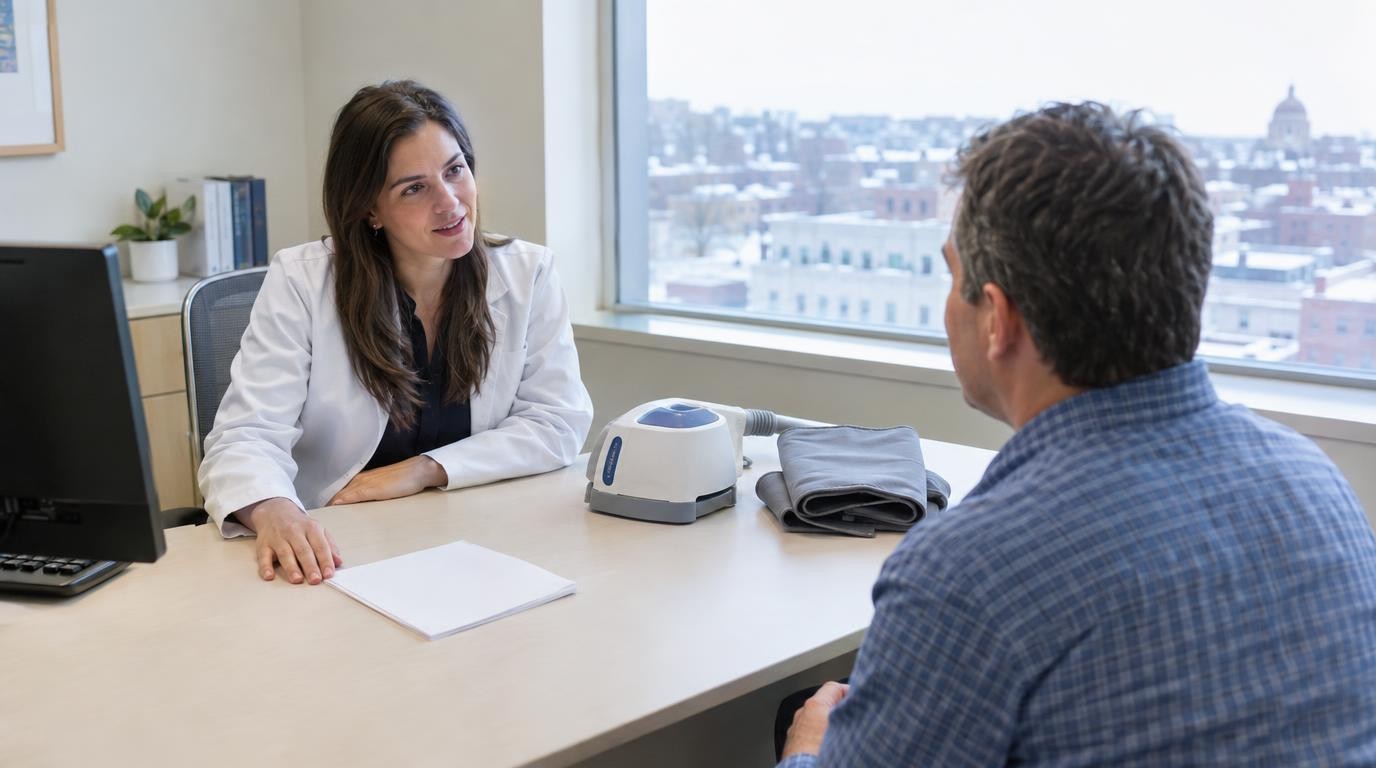
Cryolipolysis, the fat-freezing approach used by CoolSculpting, may reduce chest fat in some men with predominantly fatty enlargement, but it cannot remove the glandular breast tissue involved in true gynecomastia. The distinction matters because a chest that looks fatty may contain glandular tissue, loose skin, or a combination. At Skinsational Cosmetic Surgery Clinic, Dr. Luciano Sztulman evaluates the cause before discussing our gynecomastia surgery service.
Can CoolSculpting Treat Gynecomastia or Only Chest Fat?
CoolSculpting targets subcutaneous fat, not glandular breast tissue. CoolSculpting on the male chest is off-label: an article from Mayo Clinic Press lists FDA-cleared treatment areas, including the abdomen, flanks, thighs, upper arms, and under the chin, but not the chest. Fat-dominant enlargement, called pseudogynecomastia, may respond to cryolipolysis, while true gynecomastia involves glandular tissue that cooling does not remove. Because both can create a similar chest shape, an examination is more useful than appearance alone when choosing a treatment.
What is the difference between gynecomastia and pseudogynecomastia?
Gynecomastia is enlargement of glandular breast tissue. Pseudogynecomastia is enlargement caused predominantly by fat. A person can also have both types of tissue, sometimes with loose chest skin. Fat reduction may change the fatty portion of a mixed chest without resolving fullness from the gland.
How can a clinician tell whether enlargement is fat or glandular tissue?
A clinician reviews when the enlargement began, examines the chest, and considers symptoms, medications, and possible medical causes. A firm, mobile disc centered beneath the nipple may suggest glandular tissue; diffuse, softer fullness may suggest fat. Appearance alone cannot reliably distinguish them. Dr. Luciano assesses these factors before recommending whether male breast reduction is appropriate. For more background, see our guide to getting rid of gynecomastia and choosing treatment.
What Do Studies Show About CoolSculpting for Male Chest Fat?
Studies support cryolipolysis for localized fat reduction, but general treated-site results should not be treated as predictions for an individual chest. Small prospective studies in men with pseudogynecomastia also found improvements in chest measurements and fat thickness. Those findings concern fatty enlargement, not removal of glandular tissue or correction of loose skin.
How much fat reduction has cryolipolysis shown in clinical studies?
A 2014 review in Clinical, Cosmetic and Investigational Dermatology reported up to 25% subcutaneous-fat reduction at a treated site after one treatment. That finding spans treated sites; it is not a chest-specific result or a guarantee for any patient.
The distinction between the broader evidence and chest-specific studies is important:
| Evidence | Reported finding | How to interpret it |
|---|---|---|
| Broader cryolipolysis evidence | The 2014 review reported improvement in 86% of treated subjects. | This broader finding does not predict whether an individual male chest will improve. |
| Prospective pseudogynecomastia study | In the 2022 study, 15 men received two treatments; mean chest circumference decreased 3.05 cm eight weeks after treatment, with chest circumference and fat thickness continuing to decrease over the 16-week study period. | A small study of selected patients, not a prediction for everyone with an enlarged chest. |
| Split-body pseudogynecomastia study | In the 2018 study in Lasers in Surgery and Medicine, 10 men enrolled and seven completed the study. At week six, around the time of the second treatment and before it could have produced an effect, mean fat thickness had decreased 8.12 mm on the treated side versus 1.03 mm on the untreated side. The treated-versus-untreated difference at week 12 was not statistically significant. | The early difference followed the first treatment; the small study does not establish a predictable chest result or gland removal. |
What have studies found in men with pseudogynecomastia?
The authors of the 2022 prospective study in Annals of Dermatology identified men with mild to moderate fatty enlargement without excess skin as possible candidates.
In the Lasers in Surgery and Medicine study, four of the seven men who completed follow-up were at least slightly satisfied with the treated breast. Satisfaction was higher on the treated side, but the difference was not statistically significant. Neither study establishes that cooling treats glandular gynecomastia.
How many inches can CoolSculpting remove?
In the 2022 prospective study in Annals of Dermatology, 15 men with pseudogynecomastia had an average chest-circumference reduction of 3.05 cm—about 1.2 inches—at posttreatment week eight after two cryolipolysis treatments. That small study’s average is not a promised result for you. Chest circumference also reflects muscle, glandular tissue, skin, and how the measurement is taken, so a change in fat thickness cannot be converted into a predictable number of inches.
Who Might Be a Candidate for Chest Fat Freezing?
An adult with localized, predominantly fatty chest fullness and relatively little excess skin may be considered for cryolipolysis after professional screening. Persistent glandular tissue, substantial loose skin, or a mixture of tissue types can call for a different plan. The starting point is an assessment of what is enlarging the chest and why.
Can stage 2 gyno go away?
Stage 2 generally describes moderate enlargement; it does not establish whether the fullness is fat, glandular tissue, or both. Some puberty-related enlargement resolves, as discussed in our article on whether gynecomastia goes away, but a stage label does not mean persistent adult glandular enlargement will disappear with fat loss. Teenagers with persistent or concerning enlargement should see their pediatrician or family doctor.
When should male breast enlargement be medically evaluated?
Persistent or changing enlargement warrants assessment before cosmetic treatment, particularly when its cause is unclear. Hormonal changes, medications, and underlying conditions can contribute to gynecomastia. An article on the American Society of Plastic Surgeons site identifies a hard, fixed lump away from the nipple, nipple discharge, skin changes, or enlarged lymph nodes as signs requiring thorough evaluation rather than an assumption of gynecomastia. Seek prompt medical evaluation for these changes, sudden swelling, severe pain, or fever.
How to lose breast fat for guys?
If you have excess body fat, start with sustainable overall weight loss through nutritious eating and regular physical activity. Chest exercises can strengthen muscle, but they cannot selectively remove chest fat; weight loss may reduce fatty fullness without removing glandular breast tissue. For localized fat that remains, cryolipolysis may offer gradual, off-label, nonsurgical reduction, while liposuction removes fat surgically. An article on the American Society of Plastic Surgeons site discusses liposuction for fat-only fullness and gland removal when glandular tissue also contributes. Loose skin may require a separate surgical approach.
What Happens During CoolSculpting for Chest Fat?
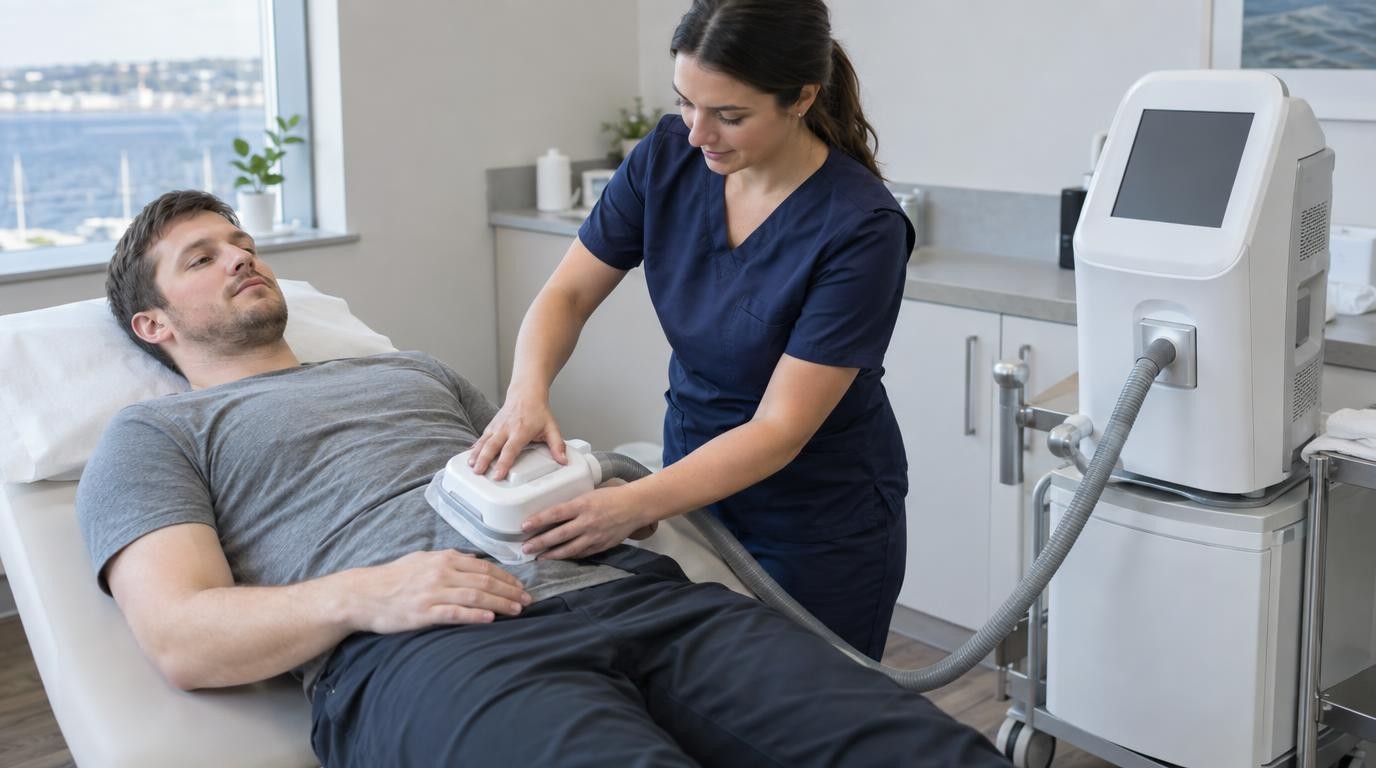
During cryolipolysis, an applicator cools a suitable area of subcutaneous fat without incisions; the contour changes gradually as the body clears affected fat cells. Traditional vacuum-suction applicators require enough pinchable fat. The small 2018 male-chest study tested a conformable surface applicator because that fat layer may be insufficient for suction, but its findings do not guarantee results with another chest or device. You may initially feel pressure and intense cold that soon dissipate, with possible pulling, tugging, pinching, or numbness. Mayo Clinic Press gives a general session length of about 35 minutes to one hour per treatment area; multiple areas take longer, and that range is not an established schedule for off-label chest treatment.
How does cryolipolysis affect fat cells?
Controlled cooling makes fat cells more vulnerable than surrounding structures and triggers a gradual process of fat-cell clearance. The Cleveland Clinic’s CoolSculpting overview says the body takes about 12 to 16 weeks to process treated fat and that treatment may involve two to four sessions overall, depending on the area and treatment; those session counts are not a schedule for off-label chest treatment. Reassessment matters because an early change may not represent the final contour.
Will a noninvasive treatment remove glandular tissue or loose chest skin?
No. Cooling is intended to reduce a localized layer of fat; it does not excise firm breast gland or remove loose skin. If either contributes substantially to the enlarged chest, fat reduction alone may leave the main concern unchanged. Our comparison of liposuction and noninvasive fat reduction explains why identifying the tissue matters before choosing an approach.
How Does Gynecomastia Surgery Remove Tissue That Cooling Cannot?
Gynecomastia surgery can remove glandular tissue as well as excess fat and, when needed, skin. At Skinsational Cosmetic Surgery Clinic in Providence, Rhode Island, Dr. Luciano plans male breast reduction around the tissue found during evaluation. Our outpatient procedure usually takes 1 to 3 hours under local anesthesia or sedation.
What happens during male breast reduction at Skinsational?
Dr. Luciano discusses the surgical plan and realistic goals during a private consultation. The procedure generally follows these steps:
- Discreet incisions are made around the areola or on the chest to reach the tissue being treated.
- Excess glandular tissue and fat are removed, with skin removal when the plan calls for it.
- The chest is reshaped, the incisions are closed, and a compression garment is applied.
- The patient receives postoperative instructions and returns home the same day.
When might the surgeon remove fat, glandular tissue, or skin?
The combination depends on what causes the fullness and how the skin may settle after tissue removal. Fat removal addresses a fatty component; gland removal addresses firm tissue that cooling cannot eliminate; skin removal may be considered when excess skin would otherwise limit the contour. No particular incision or tissue-removal technique is right for every chest.
What happens to my nipples after gynecomastia surgery?
The nipple and areola may be repositioned when more extensive tissue or skin excision is needed, as the Cleveland Clinic’s gynecomastia surgery overview explains. Their size can also be reduced when appropriate; not every operation involves repositioning or resizing. Incisions around the areola leave scars, and nipple sensation may decrease or feel numb temporarily or permanently. Nipple inversion or loss of nipple skin can also occur; these are complications, not expected effects of healing.
How Do Results and Recovery Compare?
Cryolipolysis produces gradual, variable reduction of treated fat, whereas surgery can directly remove glandular tissue and reshape the chest. Recovery also differs: noninvasive treatment generally requires less interruption, while male breast reduction involves incision care, a compression garment, and healing as swelling subsides. Neither approach guarantees a permanent chest shape.
How long is recovery after gynecomastia surgery?
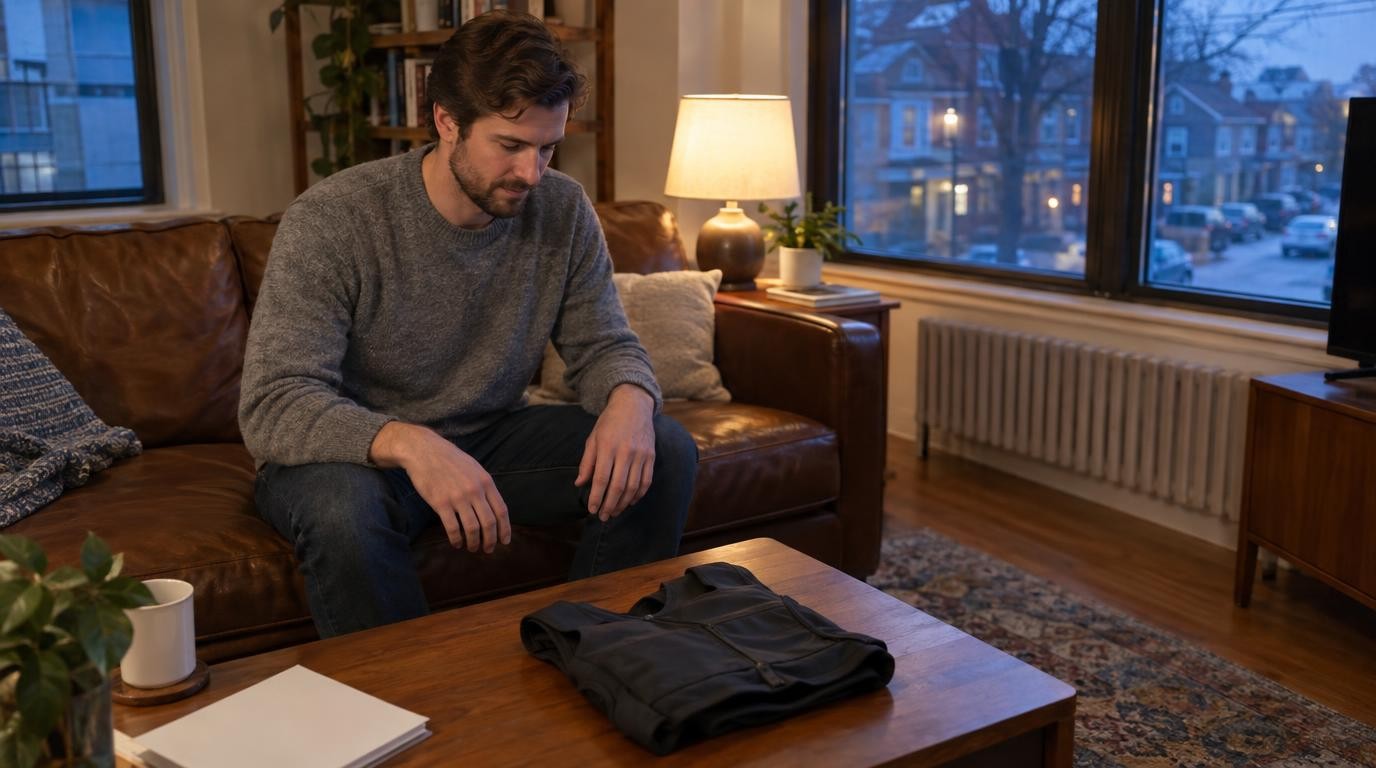
At Skinsational, most patients resume light activity within a few days and normal routines within several weeks. Patients generally wear a compression garment for several weeks and avoid strenuous activity and heavy lifting during early healing. Swelling settles gradually, so the contour continues to improve. Incisions are placed discreetly, but scars remain permanent; an article on the American Society of Plastic Surgeons site notes that they may take a full year to fade. For more on incision placement and healing, see our guide to gynecomastia surgery scars.
Will either approach prevent breast enlargement from returning?
No treatment prevents every cause of future enlargement. Fat reduction does not address a persistent gland, and later changes in body weight can affect chest fullness. Recurrence after surgery is uncommon, but it remains possible if hormonal imbalances or contributing medications persist. Identifying those causes is part of planning a durable result.
How long does CoolSculpting last?
Fat cells eliminated by CoolSculpting do not return, according to the American Society of Plastic Surgeons’ CoolSculpting overview. Weight gain can still increase chest fullness, so maintaining your weight matters. The small male-chest studies followed participants for only 12 and 16 weeks, respectively; they do not establish a lifetime chest result.
What Are the Risks, Side Effects, and Reasons to Avoid Treatment?
Temporary numbness after fat freezing, rare enlargement of treated fat, and bleeding or infection after surgery are risks to weigh. Cold-sensitive disorders may rule out cryolipolysis. We also assess the cause of chest enlargement and whether the proposed treatment area and surgical plan are suitable.
What side effects and rare complications can follow cryolipolysis?
Temporary redness, swelling, bruising, discomfort, or numbness can follow fat freezing. Rarely, paradoxical adipose hyperplasia causes a painless, firm enlargement in the treated area rather than fat reduction; the Cleveland Clinic article notes that it can appear three to nine months after treatment and may require further treatment. Tell your clinician before considering cryolipolysis if you have cryoglobulinemia, cold agglutinin disease, paroxysmal cold hemoglobinuria, or another condition triggered by cold. The clinician must check the specific device’s contraindications and whether chest treatment is appropriate for you.
What surgical risks and health factors should patients discuss?
Gynecomastia surgery can involve bleeding or a hematoma, infection, fluid accumulation, scarring, asymmetry, persistent pain, and temporary or permanent changes in nipple sensation. The American Society of Plastic Surgeons’ surgery safety page also lists blood clots and anesthesia-related risks. Health conditions, medications, and the extent of surgery affect an individual’s risk. Discuss the risks and your medical history with your own clinician before either procedure.
How risky is male breast reduction surgery?
There is no single complication rate that predicts your risk. The American Society of Plastic Surgeons’ report on a study of 145 patients ages 12–21 recorded early complications in about 10% of 270 operated breasts, including hematomas in 7.8% and minor infections in 2.2%. In that ASPS-reported study, patients whose surgery included skin removal were 2.5 times more likely to have early complications; the extent of surgery matters, and these figures do not predict an individual adult’s outcome. Other possible complications include fluid collections, blood clots, anesthesia-related problems, or a need for revision surgery. Get emergency care for chest pain or trouble breathing after surgery, and contact the surgical team promptly for rapidly increasing swelling, heavy bleeding, or fever.
How Can Patients in Providence Decide on Their Next Step?
Patients in Providence and nearby Cranston, Rhode Island, can start with an assessment of whether chest enlargement consists of fat, glandular tissue, excess skin, or a combination. The next decision is whether the likely result, medical considerations, and recovery fit their goals. At Skinsational in Providence, Dr. Luciano uses those findings to plan gynecomastia surgery when it is appropriate.
What should patients ask during a gynecomastia consultation?
- What tissues are contributing to my chest shape, and are there possible medical causes to assess?
- Which changes could fat reduction achieve, and which would require tissue or skin removal?
- What outcome is realistic for my anatomy, including any residual fullness or scars?
- What would my recovery, compression-garment use, and follow-up involve?
Frequently Asked Questions
How soon will I see results from CoolSculpting on my chest?
The American Society of Plastic Surgeons’ CoolSculpting overview says changes may be visible as early as three weeks, are most dramatic after about two months, and can continue for four to six months. Those are general CoolSculpting timelines; results from off-label chest treatment vary, and cooling does not remove glandular breast tissue.
Can I go back to work after CoolSculpting?
People can typically resume work and normal activities immediately after CoolSculpting, according to the article on the American Society of Plastic Surgeons site. Temporary redness, bruising, tingling, numbness, or discomfort in the treated area may still occur.
Can pain start weeks after CoolSculpting?
Yes. The 2014 clinical review reported late-onset pain beginning two weeks after cryolipolysis, with a reported prevalence of 0.1%; it resolved without intervention in the studies reviewed. That historical figure is not a prediction of your individual risk. Call the treating team if pain is severe, worsening, or persistent.
How long do bruising or numbness last after fat freezing?
Bruising and temporary numbness usually resolve within 14 days after cryolipolysis, according to the 2014 clinical review. Redness is another expected temporary effect. Contact the treating team if symptoms persist, worsen, or seem unusual.
What medical conditions can cause gynecomastia?
Thyroid disorders, liver disease, kidney disease, and hormonal imbalances can contribute to gynecomastia. Hormonal changes during puberty or aging may also play a role. Because an enlarged chest can have more than one cause, a clinician should assess persistent or changing enlargement before cosmetic treatment.
What medications can cause male breast enlargement?
Anabolic steroids, anti-androgens, and certain heart and ulcer medications can contribute to gynecomastia. Tell your clinician about all medicines and supplements you use when discussing chest enlargement. Do not stop a prescribed medication without speaking to the clinician who manages it.
Can gynecomastia affect just one breast?
Yes. Gynecomastia can affect just one breast, and the two sides need not look the same. If enlargement is new or changing, see the warning signs in “When should male breast enlargement be medically evaluated?” above and seek medical assessment rather than assuming it is gynecomastia.
What Is the Right Next Step for an Enlarged Male Chest?
Before deciding on treatment, note when the enlargement began, whether it changed on one or both sides, and any tenderness. Bring a list of medications and supplements to the evaluation; these details help identify possible causes as well as the tissue that needs treatment.
If you are considering male breast reduction, contact Skinsational Cosmetic Surgery Clinic to arrange a consultation with Dr. Luciano Sztulman in Providence, Rhode Island. We can examine your concerns, discuss whether our gynecomastia surgery suits your goals, and explain what recovery may involve.
This information is general and is not medical advice. Talk to a licensed clinician about your own situation before making a treatment decision.