
Last updated: November 14, 2026
A tummy tuck (abdominoplasty) can remove an apron of hanging abdominal skin and fat and may tighten separated abdominal muscles. Because an overhang can cause rubbing or interfere with walking, it helps to understand the difference between removing the fold and reshaping the broader abdomen.
What Is a Tummy Tuck for Apron Belly?
A tummy tuck for apron belly is an abdominoplasty planned to remove hanging abdominal skin and fat, then smooth the remaining skin over the abdomen. The operation may also tighten separated abdominal muscles. An apron belly is an overhang of tissue, so the amount of loose skin, underlying fat, and muscle separation shapes the surgical plan.
At Skinsational Cosmetic Surgery Clinic, our tummy tuck (abdominoplasty) service addresses excess abdominal skin and fat and can include muscle tightening. Liposuction removes fat beneath the skin; it does not cut away an apron of loose belly skin. That distinction matters when deciding whether fat contouring, skin removal, or both will address what bothers you.
What Is the Surgery Called to Remove Apron Belly?
The operation specifically named for removing a hanging abdominal apron is a panniculectomy, sometimes called an apronectomy. A tummy tuck, or abdominoplasty, also removes excess skin and fat but is designed to reshape more of the abdomen and may tighten the abdominal wall. The choice depends on whether your priority is removing the overhang, improving contour, or both.
These approaches differ in what they treat:
| Approach | What it addresses | Muscle tightening |
|---|---|---|
| Panniculectomy | The hanging apron of skin and fat | Not routinely included |
| Full tummy tuck | Excess skin above and below the belly button | May be included when needed |
| Mini tummy tuck | Mild excess skin below the belly button | Lower abdominal muscles may be tightened |
| Liposuction | Localized fat, but not loose skin | Not included |
How Is a Panniculectomy Different From a Tummy Tuck?
An article on the American Society of Plastic Surgeons’ website explains that panniculectomy targets the hanging apron, while abdominoplasty addresses the abdomen more broadly and can include muscle tightening. A fold that causes rashes or interferes with walking may prompt consideration of panniculectomy; someone seeking a smoother overall abdominal shape may have different goals.
For further detail on these operations, see this educational tummy tuck versus panniculectomy comparison.
Which Tummy Tuck Approach Can Address an Apron Belly?
A full tummy tuck is generally better suited than a mini tummy tuck when an apron belly comes with substantial skin laxity or muscle separation. A mini tummy tuck focuses on milder changes below the belly button. Dr. Luciano Sztulman recommends an approach after examining the distribution of loose skin, fat, and muscle changes.
When Might a Full Tummy Tuck Be More Appropriate Than a Mini Tummy Tuck?
Our full tummy tuck addresses the upper and lower abdomen and may be recommended for significant laxity and separated muscles. Our mini tummy tuck focuses below the belly button and is intended for mild lower-abdominal skin or fat changes. Its smaller treatment area should not be assumed to correct a substantial overhang.
Muscle tightening is not identical for every patient. The decision depends on what the examination shows, not simply on the presence of an apron. Learn more about abdominoplasty without muscle repair if you are unsure whether muscle work belongs in your plan.
Can Liposuction Be Combined With a Tummy Tuck for Apron Belly?
Yes, liposuction can be combined with a tummy tuck when removing fat would improve the planned contour. At Skinsational, a tummy tuck may be paired with SmartLipo, traditional liposuction, or VASER® Lipo to shape the waist and flanks. The tummy tuck’s skin removal addresses the hanging apron; liposuction does not replace that step.
Why Might a Surgeon Limit Liposuction on the Lifted Abdominal Skin?
Skin raised during a tummy tuck needs adequate blood flow to heal. A surgeon may therefore be conservative about liposuction directly on the lifted abdominal skin while contouring other planned areas. This is a technique decision, not a rule that combined surgery is unsuitable for everyone.
A Journal of Clinical Medicine review of post-bariatric abdominoplasty discusses newer energy-based treatments as possible adjuncts and, for selected patients with mild-to-moderate skin laxity, potential nonsurgical alternatives that might reduce or avoid surgery. Nonsurgical treatment is not an established substitute for cutting away a substantial hanging apron. The review does not establish what result an individual patient will achieve by combining SmartLipo or VASER® Lipo with a tummy tuck.
Who Is a Good Candidate for a Tummy Tuck for Apron Belly?
A potential tummy tuck candidate has loose abdominal skin or muscle separation, is generally at or near a goal weight, and understands the recovery and scar involved. A healthy lifestyle and realistic expectations also matter. Dr. Luciano Sztulman reviews medical history, weight stability, anatomy, and future pregnancy plans before recommending an individualized approach.
What Is the Ideal Weight to Have a Tummy Tuck?
There is no single ideal weight for a tummy tuck, and the operation is not a weight-loss procedure. Being near your goal weight helps make the planned contour more predictable. The American Society of Plastic Surgeons’ tummy tuck preparation article says most surgeons recommend being within about 10–15 pounds of goal weight; this is guidance, not a universal eligibility cutoff. Mayo Clinic’s tummy tuck guidance advises, ideally, maintaining a stable weight for at least 6 to 12 months before surgery.
Significant weight change after surgery can alter the result. If you are still considering when to pursue contouring, our guide to body-contouring candidacy, timing, and goals offers additional questions to consider.
What Happens During a Tummy Tuck for Apron Belly?
To treat an apron belly, Dr. Luciano removes excess abdominal skin and fat and may tighten the abdominal wall when needed. We perform tummy tucks in our accredited surgical facility. Patients typically receive general anesthesia, although Dr. Luciano will explain the anesthesia planned for your operation. The incision, waist contouring, and need for belly button repositioning depend on your surgical plan.
- After anesthesia, Dr. Luciano makes a low incision planned around the amount of skin to be removed.
- He lifts and redrapes the remaining skin over the abdominal wall.
- He brings the belly button through the repositioned skin if needed, then closes the incisions.
How Long Does an Abdomen Surgery Take?
At Skinsational, a tummy tuck typically takes several hours, depending on its complexity. The extent of skin removal, whether muscle tightening is needed, and whether liposuction is included can affect the operative plan. Mayo Clinic notes that a tummy tuck often takes less than four hours, although the time needed for an individual operation varies.
Do They Get Rid of Your Belly Button When You Get a Tummy Tuck?
No, a standard tummy tuck does not routinely remove the belly button. When abdominal skin is drawn downward, the existing belly button can be brought through an opening in the repositioned skin. A full tummy tuck commonly involves bringing the belly button through a new opening in the skin; a mini tummy tuck usually leaves it in place.
The American Society of Plastic Surgeons’ tummy tuck guide describes creating an opening and suturing the belly button into position during a full tummy tuck. Our guide to tummy tuck belly button changes and healing explains what patients may notice afterward.
What Is Recovery Like After a Tummy Tuck for Apron Belly?
Tummy tuck recovery progresses from early swelling, tightness, and activity limits to gradually improving movement and a more defined contour. Compression and limits on bending or lifting are part of Skinsational’s early guidance. Light exercise may resume with Dr. Luciano’s clearance; the American Society of Plastic Surgeons advises postponing strenuous activity for at least four to six weeks.
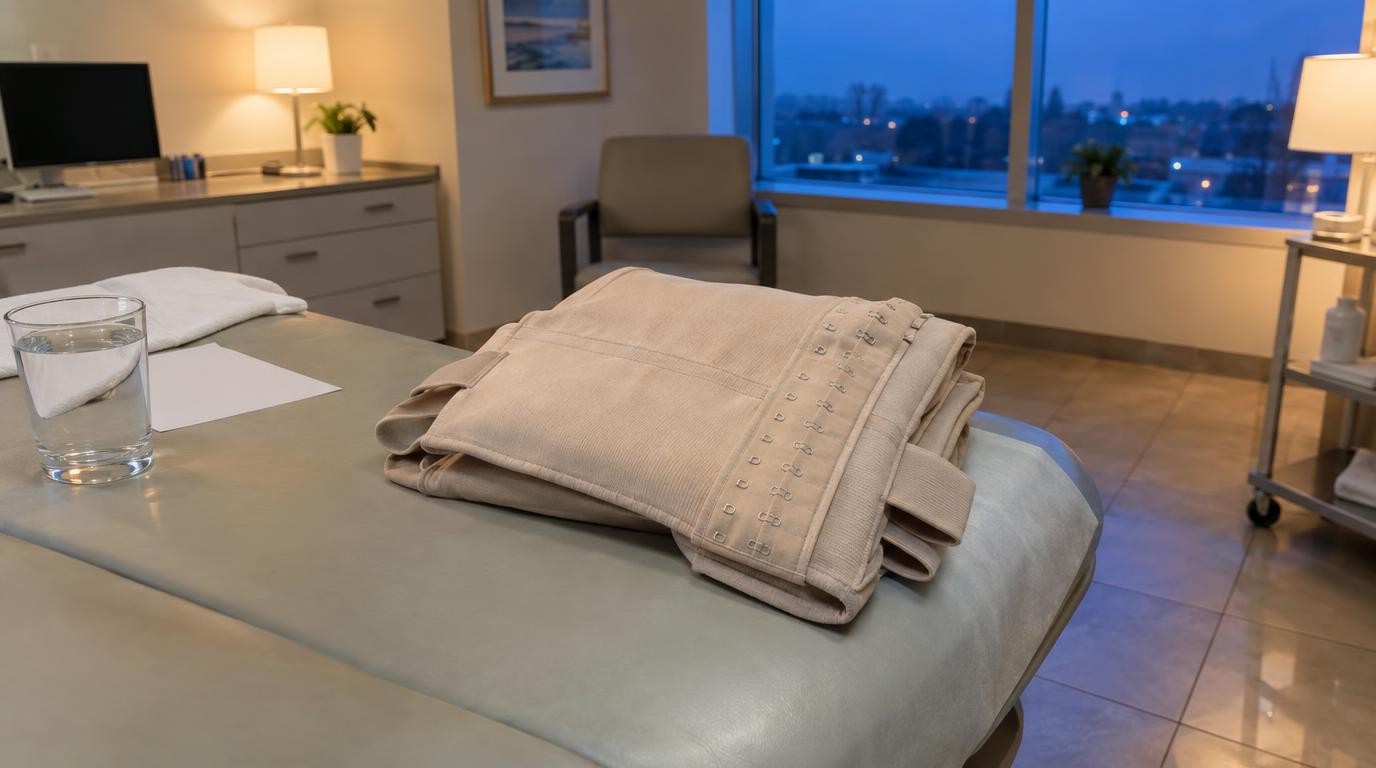
Your recovery may follow these general stages, although your timeline may differ:
| Recovery stage | What to expect |
|---|---|
| Weeks 1-2 | Discomfort, swelling, and tightness; compression garments and limits on bending, lifting, and strenuous activity. |
| Weeks 3-6 | Improving strength and mobility; light exercise may resume if Dr. Luciano clears it. |
| Months 2-3 | Abdominal contour becomes more refined, and scars begin to soften. |
| Months 3-6 | Healing and tightening continue. |
These stages are not a promise of when an individual can return to a particular task. Follow the activity, garment, incision-care, and follow-up instructions given for your operation.
What Results Can a Tummy Tuck for Apron Belly Provide?
Removing an abdominal overhang can produce a smoother, flatter contour, while muscle tightening can address separation when that step is performed. A tummy tuck leaves a low incision scar, and swelling can hide the early shape. Stretch marks improve only where the affected skin is actually removed; no specific contour or degree of improvement is guaranteed.
Results can remain long-lasting with stable habits, but future weight changes or pregnancy can stretch the abdomen again. According to Cleveland Clinic’s tummy tuck guidance, a scar may continue to improve for up to one year. Our guide to tummy tuck scarring and healing explains why the early incision is not the final appearance.
What Are the Risks of a Tummy Tuck for Apron Belly, and Who Should Delay It?
Swelling, tightness, and discomfort are expected early after a tummy tuck; bruising and numbness are also common during early recovery, and the incision leaves a lasting scar. Bleeding, infection, fluid collection, wound-healing problems, blood clots, and anesthesia complications are potential risks. When liposuction is combined with skin lifting, protecting blood flow to the lifted skin is also important. Unstable weight, pregnancy plans, or medical concerns may make postponement appropriate.
A Journal of Clinical Medicine review focused on abdominoplasty after bariatric surgery notes that abdominoplasty has been associated with a higher complication rate than other body-contouring procedures. That relative comparison does not provide a numerical estimate of your individual risk.
Mayo Clinic says a surgeon may caution against a tummy tuck if you smoke; have heart disease, diabetes, a body mass index of 30 or higher, or extensive abdominal scar tissue; need blood-thinning medicine; or have a high risk of blood clots. These factors do not all lead to the same decision for every patient. Discuss your medical history and the risks of the proposed procedure with your own clinician before deciding on surgery.
Contact your surgical team promptly for worsening wound redness, pus-like drainage, fever, unexpected bleeding, or increasing pain or swelling. Seek urgent medical care for chest pain, difficulty breathing, or new pain or swelling in one leg, which can be signs of a blood clot.
Frequently Asked Questions
Can a tummy tuck remove apron skin that extends around my hips?
An extended tummy tuck may address excess skin and fat that reach around the hips. Its lower-abdominal incision extends farther than a standard tummy tuck incision to allow removal from multiple areas. An extended approach may also require an incision around the belly button; in some cases, a vertical incision is recommended to remove substantial excess skin between the pubic area and the belly button.
What if loose skin wraps around my waist and lower back?
A circumferential tummy tuck, also called a lower body lift, may address loose skin that wraps around the torso. It uses two incisions around the torso: one runs along the lower abdomen to the lower back, and the other encircles the hips and buttocks. It can remove a circumferential apron of skin and fat to contour the abdomen, waist, groin, and thighs, making it more extensive than a standard tummy tuck.
Will I need drains after a tummy tuck for an apron belly?
You may need temporary drains, but they are not necessary for every tummy tuck. Small tubes can be placed along the incision to drain excess blood or fluid while healing begins. If drains are placed, they are temporary and are removed later as healing progresses.
Can I go home the same day after a tummy tuck?
Many tummy tucks are outpatient procedures, so you may go home after observation once the anesthesia wears off and your surgeon approves discharge. A more extensive operation or combined procedures may require overnight monitoring.
Can a tummy tuck remove my C-section scar?
It may be possible to incorporate a C-section scar into the new tummy tuck incision rather than leave two separate scars. Whether that works depends on the existing scar’s location and the skin being removed. Even if the existing scar is removed, the new lower-abdominal incision will leave a permanent scar.
When can I return to work and lift my children after a tummy tuck?
The American Board of Cosmetic Surgery’s tummy tuck guide says most patients return to work after 2 to 3 weeks. It advises full-time help with small children for the first few weeks because lifting even a 25-pound child too early can stretch the incision and prolong bleeding or swelling. If your work involves physical exertion or you need to lift a child, wait for your surgeon’s lifting clearance.
What Should You Ask at a Tummy Tuck Consultation in Providence?
Ask which operation addresses your overhang, what each planned step would change, and what tradeoffs you should expect. A consultation with Dr. Luciano Sztulman at Skinsational Cosmetic Surgery Clinic in Providence, Rhode Island, includes an assessment of abdominal skin, fat, and muscle so the recommendation reflects your anatomy rather than a standard procedure label.
- Does my overhang call for a full tummy tuck, or would a mini tummy tuck address the actual problem?
- Would liposuction add useful waist or flank contouring, and how would the plan protect blood flow to the lifted skin?
- Do you expect to tighten the abdominal wall or reposition my belly button?
- Where will the incisions and scars be, and what activity restrictions should I plan around?
- Which changes are realistic for my abdomen, and which concerns would remain?

If you are considering a tummy tuck for apron belly, contact Skinsational Cosmetic Surgery Clinic in Providence to arrange an individualized consultation with Dr. Luciano Sztulman. Our team can review the overhang, explain the options we offer, and help you understand the likely benefits and limitations of a proposed plan.
This information is general and is not medical advice. Talk to a licensed clinician about your own situation before making a treatment decision.