Last updated: October 27, 2026
Breast lift scarring is the permanent result of incisions used to remove excess skin, reshape the breasts, and reposition the nipples and areolas. Scars usually become less noticeable as they heal, but they do not disappear; their placement and appearance depend on the incision pattern and how your skin heals. At Skinsational Cosmetic Surgery Clinic, planning a breast lift includes a discussion of expected scar placement.
What do breast lift scars look like, and where are they?
Breast lift scars follow the incisions used to raise and reshape the breasts. Depending on the lift needed, scars may circle the areola, extend vertically toward the breast fold, or also run along that fold. New scars can look pink, red, or darker than surrounding skin. Scars generally fade, but remain permanent.
The incision pattern affects where mastopexy scars sit, while individual healing affects their eventual color and texture. Johns Hopkins Medicine notes that breast lift incisions are often placed where clothing can cover the resulting scars. Placement can make a scar less conspicuous, but cannot make it invisible.
Where is the scar from a periareolar (donut) lift?
A periareolar lift leaves a scar around the edge of the areola, where the darker areolar skin meets the surrounding breast skin. At Skinsational, this pattern is an option for mild sagging.
Where are the scars from a vertical (lollipop) lift?
A vertical lift leaves a scar around the areola and another running down the lower breast toward the breast fold. The added vertical incision allows more reshaping than an incision around the areola alone. At Skinsational, it is an option for moderate sagging.
Where are the scars from an anchor lift?
An anchor lift adds an incision along the breast fold to the areolar and vertical incisions. The fold scar may be covered by a bra or bathing suit, while the vertical scar can remain visible on the breast. At Skinsational, this pattern is an option when significant sagging or excess skin requires more extensive reshaping.
How do breast lift scars change as they heal?
Early breast lift scars may feel hard or lumpy; over time, they usually soften and fade. According to Mayo Clinic, the breasts are likely to be swollen and bruised for about two weeks after surgery. This early appearance is not the scar’s final appearance, which varies with skin type and individual healing.
At Skinsational, most patients return to light activities within about a week. The American Board of Cosmetic Surgery’s breast lift guide estimates 4–6 weeks for full physical recovery; follow your surgical team’s instructions for your own activities. Breast shape continues to settle over the next few months, while scars mature for much longer.
How long does it take for breast lift scars to fade?
Breast lift scars are permanent, but Cleveland Clinic says maximum fading occurs in around one year, while Mayo Clinic says scars may soften and become thin within 1 to 2 years. These are approximate timelines, not a promise of how any one person’s scars will look.
Who is more likely to have noticeable breast lift scarring?
People with a history of raised scars or a skin type prone to noticeable pigment changes may need a more tailored discussion of breast lift scarring. Incision design matters, but scar visibility also depends on how skin heals and whether recovery instructions are followed. No incision pattern or scar product can guarantee a faint scar.
Does darker skin affect breast lift scars?
Darker skin can be more susceptible to raised or otherwise noticeable surgical scarring, but skin tone alone does not predict an individual result. A 2025 systematic review in Plastic and Reconstructive Surgery – Global Open included 10 articles and reports that patients with darker skin tend to experience more adverse surgical scar outcomes. The review concerned surgical scars broadly, not breast lifts alone, and identified a need for more research on scar management in these patients.
Past scars can offer clues to how your skin heals, although they cannot predict exactly how a breast lift incision will heal. An article on the American Society of Plastic Surgeons’ site also identifies surgical technique, individual healing, and postoperative care as factors in breast lift scar visibility.
Does a history of keloids change the plan?
If you have formed a keloid or hypertrophic scar, even elsewhere on your body, tell Dr. Luciano. That history calls for an individualized discussion of raised-scar risk, incision expectations, and aftercare; no incision choice removes the risk. A keloid grows beyond the original wound, while a hypertrophic scar stays within its borders.
How does Dr. Luciano choose an incision for a breast lift?
Dr. Luciano Sztulman chooses a breast lift incision after assessing breast shape, volume, skin elasticity, degree of sagging, and the patient’s goals. At Skinsational, the options are periareolar, vertical, and anchor patterns. The aim is the least extensive incision pattern that can accomplish the necessary lift and reshaping, rather than the shortest scar regardless of result.
The patterns serve different needs:
| Incision pattern | Where scars sit | When Skinsational may consider it |
|---|---|---|
| Periareolar | Around the areola | Mild sagging |
| Vertical | Around the areola and down the lower breast | Moderate sagging |
| Anchor | Around the areola, down the lower breast, and along the breast fold | Significant sagging or excess skin |
In clinical planning, scar placement and the amount of reshaping possible must be considered together. The American Society of Plastic Surgeons’ breast lift procedure guidance cautions that insisting on an incision unsuited to your anatomy can diminish the result. Our guide to mastopexy explains the procedure in more detail.
Can a smaller incision still lift significantly sagging breasts?
A smaller incision may not provide enough access to remove substantially loose skin or reposition the breast as needed. Someone with significant sagging may get a more effective shape from an anchor pattern despite the additional fold scar. Dr. Luciano’s recommendation is individualized; the shortest visible incision is not necessarily the best breast lift procedure for a particular breast shape.
What helps breast lift scars fade safely after surgery?
Safe breast lift scar care starts with following wound-care and activity instructions, allowing incisions to heal, and protecting healing skin from sun exposure. Silicone gel or sheets may be appropriate if the surgical team recommends them. Scar care can support healing, but no product offers a reliable shortcut to fading or an invisible-scar outcome.
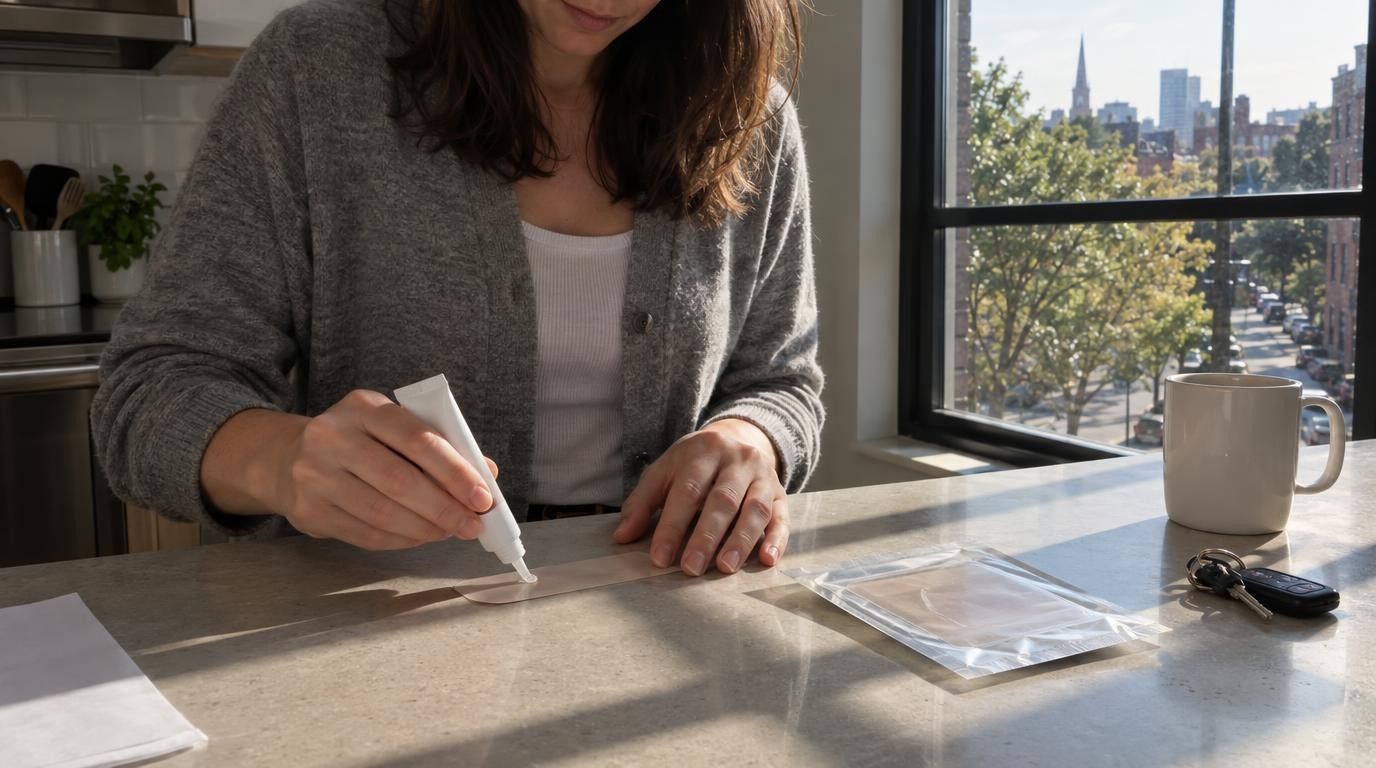
Our team provides recovery instructions based on your procedure. An article on the American Society of Plastic Surgeons’ site describes consistent silicone gel use and approved scar massage twice daily for about twelve months, sometimes longer, according to a surgeon’s instructions. Ask us whether gel or sheets, massage, and that schedule are appropriate for your incision and when each step can begin.
How can you fade surgery scars quickly?
There is no dependable way to make a new surgical scar fade quickly. Clean incisions gently with mild soap and water as directed, pat them dry rather than rubbing, and avoid soaking them until you are cleared to do so. For a broader explanation of healing habits, see our cosmetic surgery recovery and scarring guide.
What do plastic surgeons recommend for scars?
Silicone gel or sheets may be used after an incision has healed sufficiently; scar products intended for healed skin should not be applied to an open incision unless your surgical team instructs you to. An article on the American Board of Cosmetic Surgery’s site recommends covering healing incisions and using broad-spectrum SPF 30+ sunscreen only once topical products are safe to apply. An additional educational guide to breast lift scarring discusses what patients may notice as incisions mature.
Can you break up scar tissue by rubbing it?
Yes—gentle massage may help soften some firm scar tissue and improve flexibility, but forceful rubbing can disturb a healing incision. An article on the American Board of Cosmetic Surgery’s site says to begin only after your surgeon confirms the incision has healed adequately, typically 2–3 weeks after surgery. If your surgical team recommends massage, use clean hands and light circular motions as they direct; do not massage an open incision.
What if a healed scar remains conspicuous?
If a healed scar remains raised, dark, or otherwise troubling despite routine care, ask your surgical team or another qualified clinician to assess it. They may discuss scar-directed treatments, including lasers, depending on your scar and skin. The 2025 systematic review in Plastic and Reconstructive Surgery – Global Open found improved scar outcomes and satisfaction in two fractional CO2 laser studies but emphasized gaps in evidence for patients with darker skin. Those studies did not establish breast-lift-specific results, and treatment cannot guarantee that a scar will disappear.
What does scar tissue in the breast feel like after a lift?
Healing areas around a breast lift incision can feel firm, tight, tender, or slightly raised. Those sensations may change as swelling settles and scars soften. A new or changing lump, however, should not be labeled scar tissue based on how it feels; a clinician needs to assess concerning breast changes.
When should a new lump or firm area be checked?
Contact the surgical team about a new or changing lump, new or worsening firmness, increasing pain, redness, warmth, drainage, or fever. A clinician may need to distinguish ordinary healing firmness from another postoperative change: Johns Hopkins Medicine lists blood collections (hematomas) and fluid accumulation among breast lift risks. Describe where and when you noticed the change rather than trying to massage it away; the team can determine whether you need an examination.
What are the risks of a breast lift, and who may need to delay surgery?
A breast lift leaves permanent scars and carries risks including raised scarring, wound-healing problems, infection, bleeding, sensation changes, and asymmetry. Active infection or health factors that may interfere with healing can affect whether surgery should proceed as planned.
Nicotine use and some medical conditions can interfere with healing, while later pregnancy or major weight changes can alter a breast lift result. Discuss your individual risks and whether surgery is appropriate with your own licensed clinician.
Seek urgent medical care for severe chest pain or difficulty breathing after surgery. For worsening breast redness or warmth, drainage, fever, or increasing pain, contact the surgical team promptly rather than waiting for a routine follow-up.
Can a tendency toward raised scars affect candidacy?
A tendency to form raised scars does not automatically rule out a breast lift, but it can affect whether you are comfortable with the possibility of a more visible permanent scar. Choosing a smaller incision does not eliminate that possibility.
Can implants replace a breast lift if scars concern you?
Implants add fullness but are not a dependable replacement for a lift when low nipples or substantially loose skin need repositioning. A breast lift raises and reshapes sagging breasts without substantially increasing size. Skinsational offers breast augmentation and can combine it with a lift when a patient wants both improved position and added volume. Learn more about breast lift with implants in Providence, including how a combined procedure addresses position and volume.
For more on when augmentation alone may meet your goals, see our guide to implants without a lift. If you want smaller breasts as well as a higher position, breast reduction with a lift is a different option: it removes tissue rather than adding volume. Ask Dr. Luciano how a proposed reduction and lift would affect your incisions and scars.
Does a breast lift with implants change the scar plan?
It can. Combining procedures requires a plan for both breast reshaping and implant placement, including where incisions and resulting scars are expected. It should not be assumed that implants will eliminate lift incisions or produce fewer scars. The proposed pattern depends on the breast anatomy and the changes sought.
Frequently Asked Questions
How long do I need to wear a support bra after a breast lift?
Mayo Clinic advises wearing a surgical support bra 24 hours a day for 3 to 4 days, followed by a soft support bra for 3 to 4 weeks. Follow your surgical team’s instructions if they differ.
When are breast lift stitches removed?
Breast lift stitches may dissolve on their own or need to be removed by a clinician. According to Mayo Clinic, stitches that require removal are usually taken out 1 to 2 weeks after surgery. Dissolving stitches do not need a removal appointment.
Do I need a special cream for scar massage?
Not necessarily. A Cleveland Clinic guide to scar prevention says a basic over-the-counter moisturizer can be used for gentle massage; a specialty scar cream is not required. Ask your surgical team whether and when to use a moisturizer on your healed breast lift incision.
Will a breast lift change how my nipples feel?
A breast lift can temporarily change nipple sensation, and some loss of feeling may be permanent. Mayo Clinic notes that numbness in the nipples, areolas, and breast skin might last about six weeks.
Can I breastfeed after a breast lift?
Breastfeeding may still be possible after a breast lift, but the procedure can make future breastfeeding difficult. Cleveland Clinic identifies difficulty with future breastfeeding as a surgical risk. Breastfeeding ability after surgery cannot be guaranteed.
Should I wait until after pregnancy to get a breast lift?
Waiting may be worth considering if you are pregnant, planning pregnancy, or breastfeeding. Johns Hopkins Medicine notes that pregnancy and weight changes can affect breast lift results over time and suggests considering a delay if you are breastfeeding or thinking about becoming pregnant.
What should you ask about scars at a breast lift consultation in Providence?
At a breast lift consultation in Providence, Rhode Island, ask which incision pattern can meet your goals, where the scars will sit, and how your skin and scar history may affect healing. Ask when scar care can begin and which changes warrant a call. A useful plan sets realistic expectations rather than promising invisible scars.
Bring questions such as:
- Would a periareolar, vertical, or anchor incision provide the reshaping I need?
- Which scars might be visible in the clothing I usually wear?
- How should my pigmentation or past raised scars affect my expectations?
- When may I begin silicone products or gentle massage, if recommended?
- What healing changes should prompt me to contact the team?
If you are considering a lift, contact Skinsational Cosmetic Surgery Clinic for a consultation with Dr. Luciano Sztulman in Providence, Rhode Island. You can discuss the lift you want, the incisions it may require, and what breast lift scarring could realistically mean for you.
This information is general and is not medical advice. Talk to a licensed clinician about your own situation before making a treatment decision.