Last updated: September 13, 2026
For the millions of Americans experiencing hair loss, the choice between surgical hair transplant procedures and non-invasive treatments has traditionally meant accepting a trade-off between effectiveness and convenience. That landscape is shifting in Johnston, Rhode Island, where Infinity Med Spa now offers Alma TED hair restoration – an ultrasound-based approach that requires no needles, no surgery, and no significant recovery time. This development provides a middle-ground option for patients in Providence, Cranston, and surrounding communities who want visible restoration results without the invasiveness of follicular unit extraction or transplantation surgery.
What Is Alma TED Hair Restoration and How Does It Work?
Alma TED is a non-surgical hair restoration treatment that uses ultrasound energy combined with topical serums to stimulate dormant hair follicles. The technology creates micro-channels in the scalp using acoustic waves, allowing nourishing formulas to penetrate deeper than traditional topical applications.
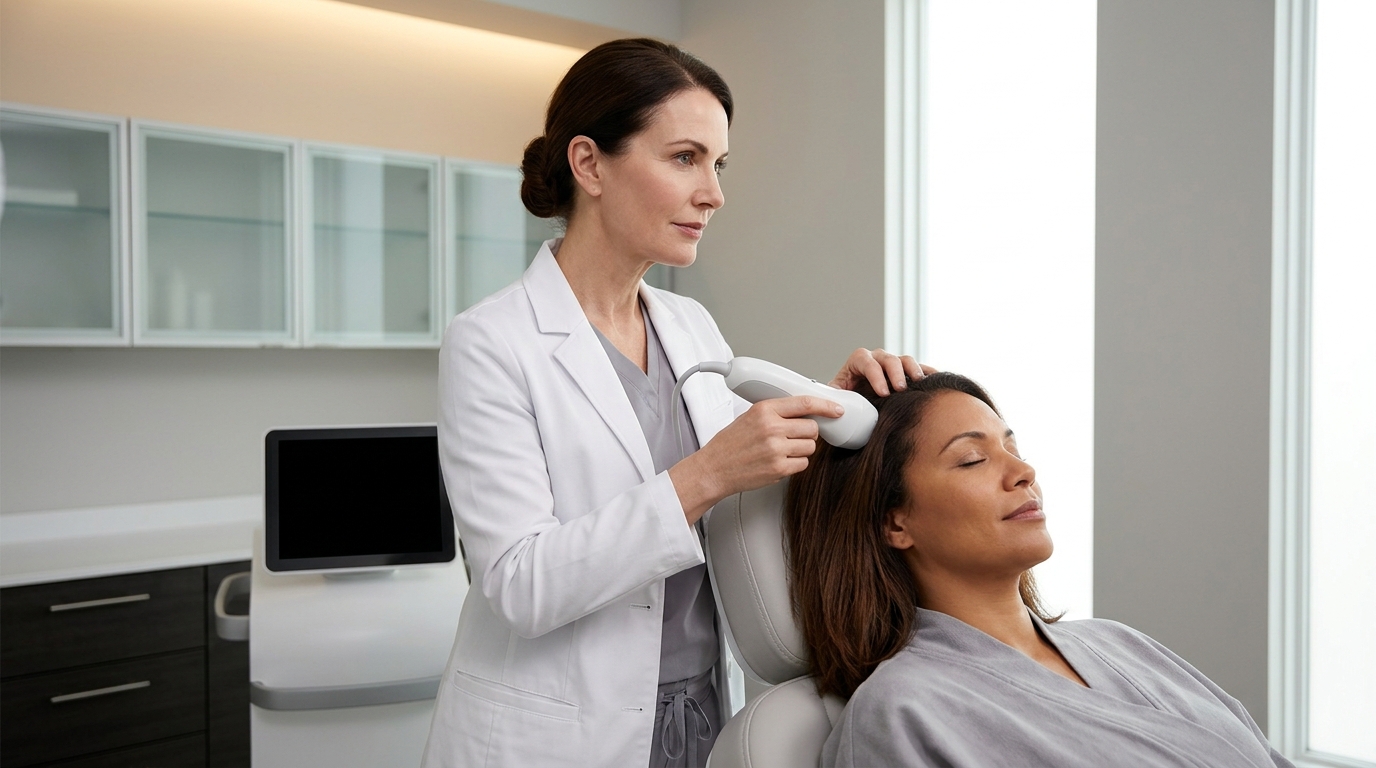
Alma TED represents a non-surgical approach to hair restoration that uses ultrasound energy to stimulate dormant hair follicles and promote new growth. The system delivers topical serums deep into the scalp through an air push mechanism, bypassing the need for injections or invasive delivery systems. This technology works by creating acoustic waves that temporarily open micro-channels in the scalp, allowing nourishing formulations to reach the follicle environment more effectively than topical application alone. According to manufacturer documentation, the combined approach of ultrasound energy and targeted serums creates optimal conditions for follicle stimulation and hair health support. The treatment sessions are designed to fit comfortably into a patient’s schedule, with the device’s handpiece applied directly to the scalp in targeted areas experiencing thinning or loss.

Is Alma TED a surgical procedure?
Alma TED is not a surgical procedure. Unlike follicular unit extraction or follicular unit transplantation, which involve removing follicles from donor sites and implanting them in thinning areas, Alma TED works by energizing existing follicles without any incision, extraction, or implantation. Patients remain fully clothed throughout treatment, and no anesthesia is required. The non-invasive nature of the technology means there are no surgical risks such as infection, scarring, or complications from anesthesia. This makes it accessible to patients who may not be suitable candidates for surgical hair transplant procedures due to health considerations or personal preferences.
How does ultrasound technology stimulate hair follicles?
Ultrasound technology in the Alma TED system works by generating controlled acoustic waves that penetrate the scalp’s surface layers. These waves create gentle pressure that temporarily increases cell permeability in the follicle environment. This enhanced permeability allows the topical TED+ Hair Care Formula serum to reach deeper into the scalp than conventional application methods. The ultrasound energy also stimulates micro-circulation, bringing additional oxygen and nutrients to the follicle area. In clinical practice, this combined physical and biochemical stimulation encourages dormant follicles to enter an active growth phase and supports the overall health of existing hair. The treatment essentially “wakes up” follicles that have become sluggish due to poor scalp circulation or environmental factors.
Who Is the Ideal Candidate for Alma TED Hair Restoration?
The ideal candidate for Alma TED is an adult experiencing early to moderate hair thinning who wants to avoid surgery. Best results occur in patients with Norwood stages 2-4 (men) or Ludwig stages 1-2 (women) who still have functioning follicles in thinning areas.
The ideal candidate for Alma TED hair restoration is an adult experiencing early to moderate stages of hair thinning who wants to address the problem without surgery. This includes men and women in the Johnston, Cranston, and Providence areas who have noticed increased shedding, widening parts, or receding hairlines but still have functioning follicles in thinning areas. Candidates should have realistic expectations about results, understanding that the technology supports existing follicles rather than creating new ones from nothing. Patients with well-preserved follicle density in problem areas tend to respond best, as the treatment amplifies the hair growth potential already present. Hair transplant candidates who explore non-surgical alternatives like Alma TED often find it aligns well with early intervention strategies and personal preferences for minimally invasive approaches.
Does Alma TED work for both men and women?
Alma TED is designed to work for both men and women experiencing pattern hair loss or diffuse thinning. While androgenetic alopecia manifests differently between sexes – with men typically experiencing recession at the temples and crown while women often see widening at the part line – the underlying mechanism of follicle miniaturization responds to stimulation in both cases. The treatment addresses the common factor of reduced follicle activity regardless of hormonal triggers. Women in East Providence, Pawtucket, and surrounding communities experiencing post-partum shedding, menopause-related thinning, or pattern loss can benefit from the same ultrasound stimulation approach as men dealing with male pattern baldness. The topical serums used in the protocol are formulated to support hair health across different scalp conditions.
At what stages of hair loss is Alma TED most effective?
Alma TED shows the strongest results in patients with early to moderate hair loss, specifically those classified as Norwood stages two through four for men or Ludwig stages one through two for women. At these stages, follicles remain present but have begun to miniaturize, producing progressively thinner, shorter hairs. The technology proves most effective when follicles still retain some biological activity – once an area has been completely bald for years and follicles have fully atrophied, stimulation has less follicle tissue to work with. Patients in Smithfield, Lincoln, and other Rhode Island communities who catch thinning early and begin treatment promptly generally see the most significant improvements. The treatment also serves as a complementary option for patients who have had surgical hair transplantation and want to support the health of transplanted and non-transplanted hair alike.
How Does Alma TED Compare to Surgical Hair Transplant Procedures?
Alma TED offers a non-invasive alternative to surgical hair transplant procedures like FUE and FUT. Unlike surgery that relocates follicles from donor areas to thinning zones, Alma TED stimulates existing follicles using ultrasound energy without incisions, anesthesia, or recovery time.
Surgical hair transplant procedures like FUE and FUT involve physically relocating hair follicles from a donor area – typically the back of the head – to regions experiencing loss. These procedures require local anesthesia, surgical extraction or incision, and a recovery period during which patients must avoid strenuous activity and protect graft sites. Alma TED takes an entirely different approach by working with existing follicles rather than transplanting new ones. While surgical transplantation can provide dramatic restoration for advanced baldness, it carries inherent surgical risks and requires significant commitment to recovery. Alma TED offers an alternative pathway for patients at earlier stages or those who prefer to avoid surgery altogether. The comparison table below outlines the fundamental differences.
| Factor | Alma TED | Surgical FUE/FUT |
|---|---|---|
| Invasiveness | Non-invasive, no incisions | Surgical extraction/incision required |
| Anesthesia | None required | Local anesthesia needed |
| Recovery Time | Minimal to none | Days to weeks of activity restrictions |
| Scarring | None | Linear scar (FUT) or punctate scars (FUE) |
| Results Timeline | Gradual improvement over months | Immediate post-procedure, final results at 12-18 months |
What are the key differences between Alma TED and FUE or FUT transplant?
The key differences between Alma TED and FUE or FUT transplantation lie in their fundamental mechanisms and what they can achieve. FUE (follicular unit extraction) involves harvesting individual follicles from the donor area using a punch device, while FUT (follicular unit transplantation) removes a strip of tissue from which follicles are dissected. Both methods redistribute existing follicles to cover bald areas. Alma TED instead stimulates the follicles already present in thinning zones, encouraging them to produce thicker, healthier hairs. This means Alma TED works best where follicles remain but have weakened, while surgical transplantation can fill areas where follicles have completely disappeared. For patients in Warwick, Providence, and surrounding communities, the choice depends on the extent of their loss and their comfort level with surgical versus non-surgical approaches.
Is there downtime or recovery with Alma TED compared to surgery?
Alma TED requires essentially no downtime compared to the significant recovery period following surgical hair transplantation. After a surgical FUE or FUT procedure, patients typically experience swelling, discomfort, and scabbing in both donor and recipient areas. They must sleep with their head elevated, avoid bending over, skip exercise for two weeks or more, and be careful not to disturb grafts during the initial healing phase. Alma TED patients can return to normal activities immediately after treatment, including work, exercise, and social engagements. Some patients experience mild warmth or tingling during the procedure, but this resolves quickly. This convenience factor makes Alma TED particularly attractive to busy professionals in North Attleborough, Cumberland, and the broader Providence metropolitan area who cannot afford the recovery time that surgery demands.
What Results Can Patients Expect From Alma TED Hair Restoration?
Patients can expect gradual improvements in hair density and thickness over three to six months. Most notice reduced shedding within two weeks, with visible fullness emerging as follicles respond to repeated ultrasound stimulation and strengthened hairs grow to mature length.
Patients undergoing Alma TED hair restoration can expect gradual improvements in hair density, thickness, and overall scalp health. The treatment protocol works with the hair growth cycle, which means results develop progressively rather than appearing overnight. Most patients begin to notice reduced hair shedding during daily routines within the first few weeks of treatment. Manufacturer guidelines indicate that consistent use of the TED+ Hair Care Formula between in-office sessions supports and extends the results achieved through ultrasound treatment. Full visible improvements in hair fullness and coverage typically emerge over several months as follicles respond to repeated stimulation and newly strengthened hairs grow to their mature length. Individual responses vary based on the extent of initial thinning, follicle responsiveness, and adherence to the recommended treatment schedule.

How soon do patients notice reduced hair shedding?
Patients often notice reduced hair shedding within approximately two weeks of beginning the Alma TED protocol when combined with consistent use of the TED+ Hair Care Formula at home. This early reduction in shedding occurs because the treatment helps anchor hairs that were previously in a loose growth phase, preventing premature release from the follicle. Reduced shedding is typically one of the first tangible signs that the follicles are responding to stimulation. Patients in Barrington, Swansea, and other nearby communities have reported fewer hairs collecting in brushes, shower drains, and on pillows after incorporating the treatment into their routines. This early feedback provides encouragement that the protocol is working even before visible thickness improvements become apparent.
What does the timeline for visible hair growth look like?
The timeline for visible hair growth with Alma TED follows the natural hair growth cycle, meaning noticeable improvements emerge over three to six months of consistent treatment. Hair grows approximately half an inch per month on average, so newly strengthened follicles produce longer, thicker hairs that gradually replace the thin, wispy hairs that were characteristic of the thinning phase. By the six-month mark, many patients see meaningful improvements in hair density and scalp coverage in previously thinning areas. Continued treatments at recommended intervals help sustain and build upon these gains. Patients seeking more comprehensive restoration may combine Alma TED with other supportive approaches, and those with advanced loss may still want to explore surgical hair transplant options available through the clinic’s services.
Where Is Alma TED Hair Restoration Available Near Johnston, Rhode Island?
Alma TED hair restoration is available at Infinity Med Spa in Johnston, Rhode Island, serving the Providence metropolitan area including Cranston, Warwick, and East Providence. The clinic offers the complete Alma TED protocol with ultrasound sessions and take-home care products.
Alma TED hair restoration is now available at Infinity Med Spa in Johnston, Rhode Island, serving patients from the surrounding Providence metropolitan area and beyond. This location provides convenient access for residents of Cranston, Warwick, East Providence, and Pawtucket who would otherwise need to travel to Boston or other distant markets for non-invasive hair restoration technology. The Johnston clinic offers the full Alma TED treatment protocol, including the ultrasound sessions and the accompanying TED+ Hair Care Formula products for home use. Patients from Smithfield, Lincoln, Central Falls, and North Providence find the Johnston location easily accessible via major routes including Route 6 and Interstate 295. The availability of this technology locally means patients can receive consistent treatments without significant travel burden.
Can Providence and Cranston residents access Alma TED nearby?
Residents of Providence and Cranston can readily access Alma TED hair restoration at the Johnston location, which sits just minutes from both communities. Providence patients traveling from downtown can reach the clinic in under fifteen minutes via Route 6 or the Woonasquatucket River Trail area. Cranston residents find the location equally accessible from the east side of the city. The proximity means patients can schedule treatments during lunch breaks or after work without extensive travel time. This convenience supports treatment adherence, as consistent session spacing proves important for optimal results. Patients from Attleboro and North Attleborough in Massachusetts also find the Johnston location within reasonable driving distance, making the service available to a broad regional population.
Why choose a Johnston, RI med spa for hair restoration?
Choosing a Johnston, Rhode Island med spa for hair restoration offers advantages beyond mere convenience. The local clinic provides personalized attention that larger urban centers often cannot match, with staff who know their patients and understand the specific hair loss concerns common to the Rhode Island climate and lifestyle. Patients in this region face the same pattern hair loss challenges as the broader American population, and local practitioners are attuned to the preferences and expectations of their community. The Johnston clinic serves as a hub for patients from Cumberland, Barrington, and surrounding towns who value receiving advanced aesthetic treatments close to home rather than traveling to Boston or New York. This community-focused approach extends to the consultation process, where patients receive individualized assessment of their hair loss patterns and customized protocol recommendations.
Risks, Side Effects and Who Is Not a Candidate
Alma TED is generally well-tolerated with mild side effects like temporary scalp redness, warmth, or tingling. Treatment is not suitable for those with active scalp infections, open wounds, certain inflammatory skin conditions, or implanted medical devices near the treatment area.
Alma TED hair restoration is generally well-tolerated, but patients should understand potential side effects and contraindications before treatment. Common side effects include mild scalp redness, warmth, or tingling sensations during or shortly after treatment, which typically resolve within hours. Some patients may experience temporary increased sensitivity in the treated areas. The treatment is not appropriate for individuals with certain scalp conditions such as active infections, open wounds, or inflammatory skin conditions in the treatment area. Patients with implanted medical devices near the scalp should consult with their physician before treatment. Pregnant or nursing individuals should postpone treatment, as should those with certain neurological conditions. As with any hair loss treatment, results vary based on individual factors, and patients should discuss their complete medical history with the clinic’s practitioners during consultation.
For those exploring comprehensive hair restoration options, Skinsational Cosmetic Surgery Clinic under the direction of Dr. Luciano Sztulman offers both non-invasive and surgical approaches to address virtually any degree of hair loss. The clinic’s team combines expertise in advanced technologies like Alma TED with decades of experience in surgical hair transplantation techniques for patients whose needs require more extensive intervention. Whether you are just noticing early thinning and want to explore conservative options or have significant hair loss and are considering the surgical route, the experienced team can guide you toward the most appropriate solution for your individual circumstances. Contact Skinsational Cosmetic Surgery Clinic today to schedule a consultation and learn which hair restoration approach aligns with your goals, lifestyle, and expectations.
Frequently Asked Questions
What is Alma TED hair restoration and how does it work?
Alma TED is a non-surgical hair restoration treatment that uses ultrasound energy to stimulate dormant hair follicles. The system delivers topical serums deep into the scalp through an air push mechanism, with acoustic waves creating micro-channels that allow nourishing formulations to reach the follicle environment more effectively than topical application alone.
Is Alma TED a surgical procedure?
No, Alma TED is not a surgical procedure. It requires no needles, no incisions, and no anesthesia. Patients remain fully clothed throughout treatment while the device’s handpiece is applied directly to the scalp. There are no surgical risks such as infection, scarring, or complications from anesthesia.
How does Alma TED compare to surgical hair transplant procedures?
Unlike FUE or FUT transplantation that extract and relocate follicles from donor areas, Alma TED stimulates existing follicles without any extraction or implantation. Surgical procedures require local anesthesia and involve days to weeks of recovery with activity restrictions, while Alma TED requires no downtime and patients return to normal activities immediately after treatment.
How long does it take to see results from Alma TED hair restoration?
Most patients notice reduced hair shedding within approximately two weeks when combined with the TED+ Hair Care Formula. Full visible improvements in hair density and coverage typically emerge over three to six months as follicles respond to repeated stimulation and newly strengthened hairs grow to their mature length.
Who is the ideal candidate for Alma TED hair restoration?
The ideal candidate is an adult experiencing early to moderate hair thinning who still has functioning follicles in thinning areas. Best results occur in patients classified as Norwood stages two through four for men or Ludwig stages one through two for women. Candidates should have realistic expectations, understanding that the technology supports existing follicles rather than creating new ones.
What are the risks and side effects of Alma TED treatment?
Side effects are generally mild and temporary, including scalp redness, warmth, or tingling during or shortly after treatment that typically resolve within hours. The treatment is not appropriate for individuals with active scalp infections, open wounds, inflammatory skin conditions, or certain implanted medical devices near the scalp. Pregnant or nursing individuals should postpone treatment.
Related reading
- Hair Transplant Candidates: What Makes an Ideal Patient in 2026?
- Hair transplantation procedures using surgical techniques to relocate hair
- Hair Transplants & Regenerative Medicine Options
This article is general information and is not medical advice. Talk to a licensed clinician about your own situation before making a treatment decision.